
27th April 2024
Dear Readers
As readers of this website will know, this Website forms the basis of a Campaign for better, more geographic-specific Regional TV News-coverage for Northumberland up to the Scottish Borders. The huge rural area encompassing rural Northumberland and the Scottish Borders really needs its own Regional TV news, it covers an area of almost 10,000 square kilometres. By contrast, the entire area of the remainder of North East England and North Yorkshire (which often gets 95% News- coverage on ITV1 News Tyne Tees) is just over 12,000 square kilometres. Community links across the Scottish Border are strong and, for viewers who live in northern Northumberland (north of Alnwick) news about places like Duns, Eyemouth and Kelso become more important than coverage of Sunderland, Darlington, or Durham city.
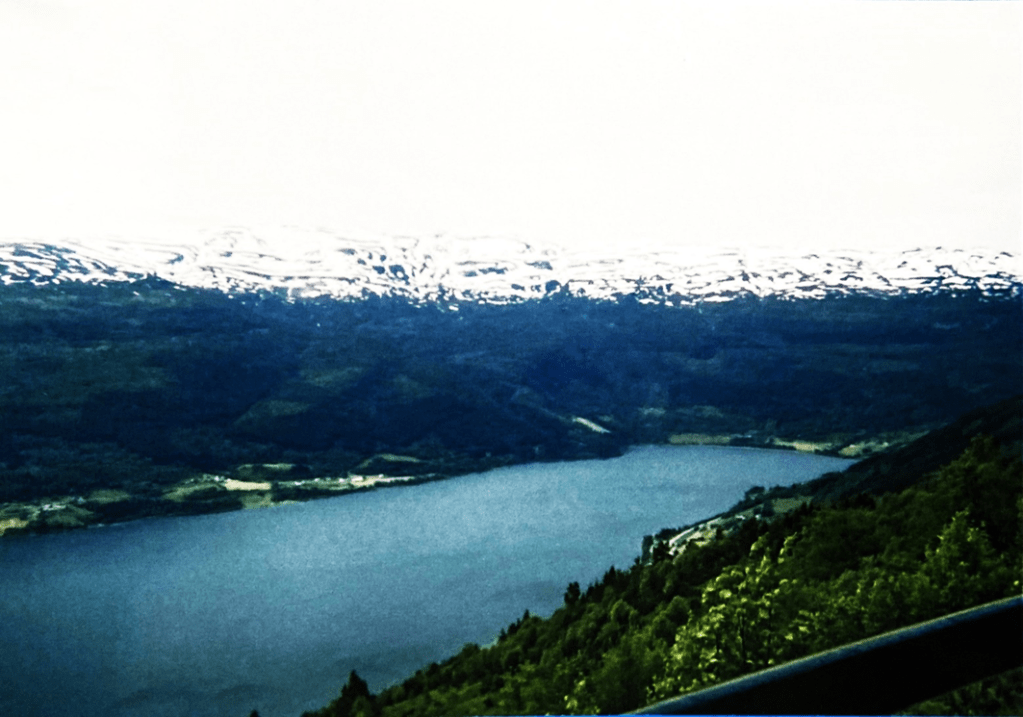
Wider Regional links across the North Sea with Norway, and also with Scotland
Wider Regional links are also significant: However, one must bear in mind that nowhere outside of an hour’s travel time is local what happens in Teesside or North Yorkshire is going to be little relevant to viewers in places like Seahouses and Wooler. What matters is what is local to folk who live and work in specific areas, and for a significant number of folk who live in northern North East England the “place of work” is likely to be out in the North Sea. There are 28,000 workers still directly involved in North Sea Oil and gas drilling (see here: https://www.newstatesman.com/spotlight/sustainability/energy/2023/10/rosebank-new-oil-fields-uk-north-sea-workers ). The English North East and North-East Scotland accounts for the lion’s share of folk working in these industries: We can take it that North East England accounts for over a third of those, and that is over 10,000 workers (most of this folk live from Tyneside northwards). To that we can add those involved in fishing and new North Sea industries such as offshore Wind-farms like Dogger Bank (80 miles east of Newcastle). This brings the number of such workers to well over 10,000 for coastal communities stretching northwards of Newcastle-upon-Tyne up to Berwick and then towards Edinburgh.
For such North Sea workers, accounting for at least two percent of the working-age population living North of the Tyne, relevant “local news” is going to be about Oil-rigs and Wind-farms out in the North Sea close to the marine national border between the United Kingdom and Norway. This, in turn brings us to another crucial point: That’s because there is collaboration between many of these North Sea industries, those on the Norwegian side of the National border with those on the Scottish/ Northumbrian side of the National border. In other words, the North Sea Oil and gas industries and the new offshore Wind-farm industries, bring about collaboration and interaction between Northumbrians, Scots, and Norwegians.
The wider links that Northumberland and the Scottish Borders have with Norway are not restricted to North Sea industries. There are educational and tourist links such as the arrangement that Voss Vandrarheim (Youth Hostel) and Ski Resort has with schools in Northumberland and Tyneside which started back in 1971 (link here: https://vosshostel.com/en/school-groups/). Thousands of Norwegians and Swedes visit Tyneside and Northumberland each year. This is of wider regional significance to areas North of Tyne, but it gets little recognition in Regional TV broadcasting. There’s even less of Regional political programming discussing whether the languages taught in schools and colleges in the North East ought to be geared towards strengthening ties with countries over the nearest National boundary (to the north-east of Northumberland): This is even more acute considering the Scottish Borders, and it strongly suggests pupils should be taught Norwegian or Swedish more than Spanish, that at least there should be televised political discussion about this.
It also is obvious that this large area has strong ties north-westwards with Scotland, with Berwick-upon-Tweed less than an hour by train from Edinburgh and little more than an hour to Glasgow. The fact that Berwick Rangers Football Team is in the Scottish National Football League alone demonstrates that Berwick-upon-Tweed has wider Regional links that are rather different than those imposed on it’s populace by the BBC and ITV.Plc. Berwick-upon-Tweed was also the administrative centre for the ancient county of Berwickshire, most of which extends across what is now the eastern end of the Scottish Borders.
Local Affiliations across rural Northumberland and the Scottish Borders
It is for the Immediate Local and Regionally Local affiliations of folk living in Northumberland and the Scottish Borders that Regional TV News broadcasts and relevant political programming leave much to be desired. This is a large area which, taken together is almost 400 miles north of London and which is closer to the south-west coast of Norway. The local and wider regional connections of folk living in this huge area extending from the A69 and the River Wansbeck in the south to the Lammermuir Hills just 20 miles south-east of Edinburgh. This is a large rural area, with extensive areas above 250 metres altitude which often gets extensive snowfall in winter.
Issues that affect the day-to-day lives of most folk living in this large Northumberland- Scottish Borders area will not be those that impact folk living in urban Tyneside or Wearside. On a daily basis, people are affected by happenings in their local vicinity, visiting friends, commuting or going shopping. That is, involving happenings within half an hour’s travel time of their home (about 25 miles). That is Immediate Local. A day out in nice summer weather, visiting friends and family a bit further afield for a day, commuting to a well-paid job, etc. will involve travel times up to an hour away (fifty miles away, or up to eighty miles close to the East Coast Main Line). This is Regionally Local. Anything involving travel times of more than an hour cannot be considered local in any way and viewers of Regional News-bulletins may as well just stick with the National News if all their “Local” news is about happenings over an hour’s travel-time distant.
This means that for folk living in northern Northumberland and along the north-east end of the Scottish Border, what happens in Teesside, Sunderland or County Durham has little or no more relevance to them than what is happening in London, et least on a daily, weekly, or monthly basis: That is, unless they have family living in those places. For folk living in northernmost Northumberland what is happening in places like Dunbar and Haddington, across the Scottish Border and towards Edinburgh is much more likely to be locally significant. The historical cultural, and family ties between the Berwick-upon-Tweed area and the Scottish Borders, and towards Edinburgh are strong as have been mentioned above. It therefore follows that Regional TV News-coverage which 90% or more covers Tyneside, Teesside, North Yorkshire and (in the case of the BBC, Cumbria too), and which won’t go over the Scottish Border (to cover news that is of much more interest to North Northumbrians) does not provide a relevant Regional TV News-service.
National and International News-coverage and Regional Political coverage
All North-East England, Northumberland included, receive the same BBC1 and ITV1 National News and Political programming too. They receive the same National News programming as those who live in Penzance in far South-West England (556 miles from Berwick-upon-Tweed by car, a journey that would take just over ten hours in good road conditions- without stopping, which is unrealistic). Folk do want to know what is happening across the country as matters like the Chancellor of the Exchequer announcing Tax-increases, National legislative changes or national Opinion Polls indicating a change of Government are of direct relevance to everyone in the country affected by these matters. It does not matter if these are not local, because legislation passed in Westminster some 350 miles away will lead to impacts closer to home.
Issues like violent crimes in cities, road accidents on so-called “smart motorways”, even if they are not local inform folk about what is happening in their country: If this is because of national policies and laws, similar issues could crop up closer to home. Furthermore, at least once a year, most folk in Britain travel away to places that are far enough from home as to necessitate an overnight stay. Sometimes, folk travel abroad on holiday or, occasionally to attend important events like weddings or to visit family abroad. This brings us neatly to the shortfalls in the One-Size-Fits-All National and International News and Documentary programming proffered by the BBC and ITV.
It is clear that National and International TV Programming that is likely to be most relevant for different parts of the United Kingdom will vary. The closest country outside the UK’s jurisdiction to northernmost Northumberland (excluding the Irish Republic) is Norway: If one goes by the national marine boundaries, Norway’s jurisdiction slightly closer to Berwick-upon-Tweed as the Irish Republic (both about 160 miles from Berwick-upon-Tweed as the crow flies). For the Shetland Isles coastal western Norway is by far the closest land area outside the UK’s jurisdiction, which at just 200 miles is half the distance from the Shetland to Malin Head, the northernmost part of the Irish Republic (third closest jurisdiction outside of the UK after the Faeroe Islands). But, south-east of a line that runs from Skegness to Bristol, France is the closest country outside the UK’s jurisdiction (source: https://www.doogal.co.uk/MeasureDistances).
Despite this, it is clear that Northumberland receives National/ International News that is often quite London-centric and which dutifully reports France as the closest neighbouring country. This London-centric view is not restricted to news, with the National Education system rolled out across the entire United Kingdom mandating that French and/ or Spanish be the foreign languages to be taught in all schools- even in areas where wider regional and cross- border links may be with Norway and Sweden, not France and Spain!
Other countries don’t do this: Switzerland is a good example, which is a much smaller nation by area than just England, let alone the entire United Kingdom. Yet in the south of Switzerland, close to the Italian border people speak Italian and children learn this language at school. In the west of Switzerland people speak French, but in the north-eastern half of the country people speak Swiss German (and children are taught in that language at school). In the north of Switzerland, German National TV News is available for viewers so that they can find out what is happening just over the border into Germany. Additionally, Switzerland has more TV Regions providing more localised news-services (for all this refer to my article on Regional TV in Switzerland here: https://looknorthmustlooknorth.org/2021/12/30/regional-television-in-switzerland/).
If the British Educational system were to copy the Swiss system French and Spanish would be taught in schools up as far as a line running roughly from Hull to Carlisle, north-east of that line Norwegian and Swedish would be taught in schools, and in Scotland the learning of Gaelic would be made more widely available. In terms of news-programming, French National broadcasts would be made available for places like the Channel Islands and south-east England, specifically Kent and Sussex whilst Norwegian broadcasts would be made available for folk living in eastern Scotland and North-East England. As discussed above, wider Regional links, in terms of business connections, where folk travel for short breaks, etc. will vary greatly across the country. The wider regional business connections for a fisherman on the Northumberland Coast will be very different to those of an International banker based in Kent.
Real Northern News for Proud Northumbrians and National recognition of wider regional links North and North-eastwards
Northumberland and the Scottish Borders have different local, and different wider Regional affiliations than other parts of North-East England, such as Teesside. At a local level, because of the unique northwards geographical position of this large area, Regional TV providers should provide opt-out programming for rural Northumberland and the Scottish Borders. Neither BBC1 Look North (NE/ Cumbria) nor ITV1 News Tyne Tees provide geographic- appropriate news-coverage for northern Northumberland, and BBC1 Reporting Scotland has too much coverage of the Forth Clyde Valley to provide local coverage to the Scottish Borders and East Lothian, much of which is over 50 miles eastwards and parts are only slightly south of much of the Forth Clyde Valley. Not even ITV1 Border Lookaround covers the Scottish Borders well, even though it provides very good local news-coverage for Cumbria and south-west Scotland.
ITV1 News Tyne Tees would be best-placed to provide opt-out programming, not least because both ITV1 News Tyne Tees and ITV1 Border Lookaround are produced by the same ITV1 Regional broadcaster, namely ITV1 Tyne Tees & Border. The broadcaster could provide opt-out programming for Northumberland and the Scottish Borders, transmitted from Berwick-upon-Tweed and the Selkirk transmitter. This would cover Northumberland in the north of the ITV1 Tyne Tees transmission area and the Scottish Borders in the north-east quadrant of the ITV1 Border transmission area. This would provide much more localised coverage about central and northern Northumberland and the Scottish Borders, with some overlap coverage into East Lothian.
Such a Regional TV-service would provide viewers in places like Berwick-upon-Tweed, Coldstream, Wooler, and Chirnside with a much more localised service: Viewers would have a real chance of actually seeing four or five news-items a night coming within an hour’s drive of their homes! That would be a real Public-service that informs, and advises viewers of events, opportunities, and severe weather conditions locally in the winter. Showing severe winter conditions in the hills, or spring snowfalls on The Cheviots also serves another purpose- in affirming the uniqueness of the northern latitude of Northumberland and the Scottish Borders. In the process of showing such Real Northern News with some icy zing, this “Bigs Up” the Northern pride of North Northumbrians who are proud of their unique northerly region compared to most other parts of the United Kingdom.
Wider regional links are also important. Along the Scottish Border bordering North Northumberland folk are more likely to travel to Edinburgh or even Glasgow to go to the airport if they go on holiday or go on a major shopping trip rather than to Newcastle or Gateshead Metro-centre. Ideally, Regional TV has about 20% of news from half an hour’s travel time away out to an hour’s travel time distant.
Beyond that, folk watch National News to find out what is going across the country, regarding places that would involve overnight stays if travelled to because they are more than an hour’s travel time distant, or the country with which they are affiliated. A sizeable portion of the population who live in and around Berwick-upon-Tweed identify with Scotland and have strong Scottish ties, and it follows (therefore) that these viewers should be able to receive Scottish National news such as BBC1 Reporting Scotland. Folk living in northernmost Northumberland would not want, nor should they expect lots of news about Glasgow or Aberdeen in Regional TV broadcasts because those places are in no way local. But the National News and documentary programming available to a Berwicker should be different to what is available to a Londoner or a Devonian farmer. North Northumbrians like to see news that enhances and “Bigs Up” their sense of Northern pride in the latitude of their communities, so seeing news-coverage of skiing in the Cairngorms, or fisherman struggling with storms in the North Sea between Scotland and Norway affirms their latitude and enhances their sense of “Northern-ness”. News about pollution in the River Thames, or documentaries about “Neighbours from Hell” in leafy Surrey diminishes their sense of “Northern-ness”,- so proud North Northumbrians should not have to suffer it.
Communities northwards of the River Tyne in Northumberland, in the Scottish Borders and East Lothian, particularly near the coast have a number of families which have cross North Sea links with Norway (as mentioned above). Unfortunately, there is nowhere in the UK, not even on the Shetland Isles (which is just 200 miles from coastal Western Norway) where one could get a transmission signal to receive Norwegian Regional or National News on television.
For these families, access to Norwegian National News from broadcasters like Norsk Riks Kringkasting (NRK2) would provide an option to find out what is happening north-eastwards across the northern North Sea. That’s despite NRK2 Programming being in Norwegian, but broadcasters provide some Real Northern News about a country with which they may have strong ties. The National Norwegian News-programming (Dagsrevyen) is available on the internet on the NRK2 website about an hour after being broadcast in Norway, and any North Northumbrians can find it here if they are interested (usually with Norwegian subtitles that can help those not proficient in the language): https://tv.nrk.no/serie/dagsrevyen. For Northumbrians who have little Norwegian, but who nonetheless have friends, family, or colleagues who they know living there there is also a Norwegian News website- in English- here: https://www.newsinenglish.no/.
Whether folk know Norwegian or not, there are communities the length of coastal north- eastern Britain that have links with Norwegian communities, through the Oil and fishing industries, through school skiing exchanges, through family relationships and just visiting Norway and making friends. Bergen and the surrounding fjords, and inland to the Voss Ski-resort in south-west Norway is less distance to fly to than to Devon or Cornwall for some-one living in Tyneside or Northumberland. Sure, it’s not local to Northumberland and visiting Norway on a short break would involve a few days away from home but thousands of Northumbrians have visited Norway and will have probably made a Norwegian friend or two. The total impossibility of getting any TV News Channels about Norway, for such folk living in Northumberland and the Scottish Borders must leave a sour taste.
North Northumbrian and Scottish Border Communities Can Take Action
The good news is that there is power in communities coming together to confront Regional TV broadcasters and National broadcasters that do not provide the geographical service that they want. People living in places like Coldstream, Berwick-upon-weed and North Berwick (East Lothian) have a need for news and documentary programming that addresses their concerns, which provides relevant local news (with that not being about places 60 or more miles away). They also need periodic recognition of their wider Regional links that are appropriate to their area: That means, not endless news about Newcastle-upon-Tyne or Teesside or (for locations north of the Scottish Border) Glasgow-centric and Holyrood-centric coverage. Certainly, for the ITV1 and BBC1 transmission areas covering East and Northern Scotland and North-East England there is a need for documentary or news-programming that reflects unique cross North Sea links to Norway.
Viewers, collectively, have the tools to change what they can get not only through writing to broadcasters like BBC1 (NE/ Cumbria) and ITV1 Tyne Tees and Border. Viewers can write to local MP, but they can also write to the Culture Media and Sport (CMS) Committee based in Parliament at: CMS Committee, House of Commons, London, SW1A 0AA. The CMS Committee exits to exert pressure on the Government in relation to (amongst other things) Television broadcasting. But communities, if they come together, can also bring pressure on broadcasters through the Power of Protest.
Thirty-eight years ago, in 1986, the BBC decided that all of Cumbria should receive North West Regional News from Manchester. This was on the grounds of all of Cumbria being in the North West of England. As a result, there was uproar since viewers in the Carlisle area of North Cumbria did not want “local” news that was 80% about Manchester, Liverpool, and Cheshire some 120 or more miles to the south, whilst getting little local news and not getting to hear anything about Hexham and the Tyne Valley- with which North Cumbrians had links- less than forty miles to the east. This led to a concerted campaign by local communities to get North Cumbria’s BBC Regional TV switched back to Newcastle. Local newspapers became involved and there were protests. After five years of this, in September 1991 the mighty BBC backed down and northern Cumbria was moved back to BBC1 North-East, which later became BBC1 North-East and Cumbria. Read more of this sorry episode in the BBC’s history here: https://northwestisnorthwest.org/2021/07/thirty-years-ago-people-power-changed-regional-tv-in-northern-cumbria-and-it-can-in-northern-lancashire-too/.
The BBC had to learn another salutary lesson from this sorry episode: Proud North Cumbrians did not like their esteemed sense of “Northern-ness” being diminished by being subjected to Regional TV News from miles to the South of them. Cumbrian’s would have found it less painful to get news from north of the Scottish Border (which is partly why so many Cumbrians switched over to watch- as it then was- Border TV Lookaround). It’s why North Cumbrians fought back hard, they did not want to have an association with Cheshire 150 miles to the South of them foisted upon them diminishing their Northern-ness!
Folk living in communities across northern Northumberland and the Scottish Borders could club together to bring about a similar cave-in from either ITV1 Tyne Tees & Border or BBC1 North-East & Cumbria/ BBC1 Scotland. Regional broadcasters do not like protestors with placards outside their offices stating that Regional TV near the North Northumberland/ Scottish Border is not up to scratch: It’s bad publicity! What will have real effect is a group of perhaps just 100 people with placards outside ITV Tyne Tees & Border HQ for a period of weeks with placards showing Our North Northumbrian News Is Not Good Enough AND We Will Boycott Your News and stick With Northumberland Live If It Doesn’t Change, and other placards saying You Must Recognise of Our Wider Norwegian and Scottish Links OR We Will Learn Norwegian and Watch NRK2 Dagsrevyen from Our Computers!! There should be no rowdiness or shouting, just day- after- day reminders- in Public view- as to why Regional TV programming and other Nationally available programming is not good enough. If enough folk then follow up by switching channels and can contend with internet news-outlets to get localised news that then puts further pressure on broadcasters.
Political pressure is also necessary: Involvement in a political Party like the Liberal Democrats who are good on local issues and suggesting to that Party that Regional TV should be designated a Public-service and funded well enough so that Northumberland and the Scottish Borders gets good local news-coverage, with recognition of their own wider regional links is a smart move. If a Political Party gets involved at a Regional level demanding more, and better-funded Regional TV services and documentaries that heaps further real pressure on broadcasters. At a Regional level, Northumbrians and Scottish Border folk can also set up Campaign Groups, using platforms like 38 Degrees to demand that Northumberland and the Scottish Borders recognise wider Regional and cross-National-Border links suitable for their communities: Making the bairns learn Spanish at school, when the nearest non-English speaking neighbouring country is Norway is senseless. These can then put pressure on Local and National Government to, for instance, restrict the movement of people from the South (or immigration) from “mixing out” the local Northumbrian dialects and unique Northern hospitality for which Northumberland is still unique.
It is within the gift of communities living up along the Northumberland- Scottish Border to take charge of their local News-coverage, and the wider Regional broadcasting services that they receive. Folk also have, if they club together with like-minded friends, the tools to decide what other parts of the country or indeed areas outside of the UK’s official jurisdiction they wish to be affiliated with. Ultimately local councils up to National government have to give way to the Power of Voters: It’s called Democracy!
Kind Regards
Ian Pennell (Look North Must Look North)
 LOOK NORTH MUST LOOK NORTH