This is a website discussing the appropriateness, or otherwise, of Regional TV for folk living in the northern half of North East of England, specifically Northumberland/ North of Tyne and across into the Scottish Borders. This is a huge area that is relatively poorly-covered, especially northwards of Tyneside. However, it is occasional coverage of happenings, sights and places to visit in Norway, including Arctic Norway, with which a significant number of folk living in Northumberland, Tyneside and Scotland have connections with: Even the fact that Norway has spectacular scenery for a short break that is no more than several hours away by train to Edinburgh Airport then by plane from there means that rather more folk living in the most north-eastern parts of the UK would like the service of at least being informed of this beautiful (and in winter icy) land that is no more than a few hundred miles away from their homes.
Folk living in the most northerly regions of the UK need some news that affirms their sense of Northernness with a real Zing at times being offered by Regional TV broadcasters: This affirms to them and the fact that, unique to them that they are less distant, compared to other parts of the UK, from the Icy Regions even further north of them. Folk living on Tyneside, in Northumberland and up across the Scottish Borders get none of this from Regional TV broadcasters and certainly not from national programming off the BBC or ITV1: Instead they more often get (when BBC1 Look North (NE/ Cumbria) is not on air due to “technical problems” every six months) news about Leeds and Sheffield- i.e., well south of them- diminishing their sense of Northerness!
If Northumbrians do not have their Northernness enhanced but diminished (by having news and happenings to the south of them broadcast to them), and they don’t feel unique compared to places well to the south they, and the communities that they live in, are diminished and even insulted. If folk feel overlooked, and neither Regional and National programming (as received by viewers) is distinct and addresses their interests and does not make them feel special (about the Northern location of their communities) this makes them feel dejected. This can even damage social cohesion by damaging the pride in their uniqueness of communities- which in turn helps glue communities together.
Hence, it is fitting and timely that Geordies and Northumrians are offered an icy panacea with real “Zing”: Introducing A Winter Adventure to the Frozen North– to Norway and the Norwegian High Arctic, complete with illustrations. Norway is a country that gets no special mention in either Scottish or North East English TV News-broadcasts more than other parts of the UK get- despite the south and west Norwegian Coast being closer to Northumberland than the coast of Cornwall.
So, presented here for Northumbrians who do not get their Northernness properly enhanced (but always diminished with news about events well to the south of them, even from Regional TV) are the pictures I took last month (February 2025) travelling to the High Arctic. I hope that this provides a little affirmation of folks’ Northernness, and of great places, real cold in a wonderful land no further to the north-east of you than Cornwall is to the south-west of you. Enjoy!!
A Winter Trip to The Frozen North (February 2025)
My trip started in central southern Norway on the edge of the Hardangavidda (Plateau) during which time (from 10th to 15th February) I was based just outside Geilo, a small town which is a ski-resort in winter. The weather was largely fine, but with eight inches powdery snow-cover and very cold, -12 ̊C to -15 ̊C at night and about -5 ̊C in the warmest part of the day. Here are a selection of the places visited in and around Øen Turistsenter (where I stayed). All photos courtesy of Ian Pennell:
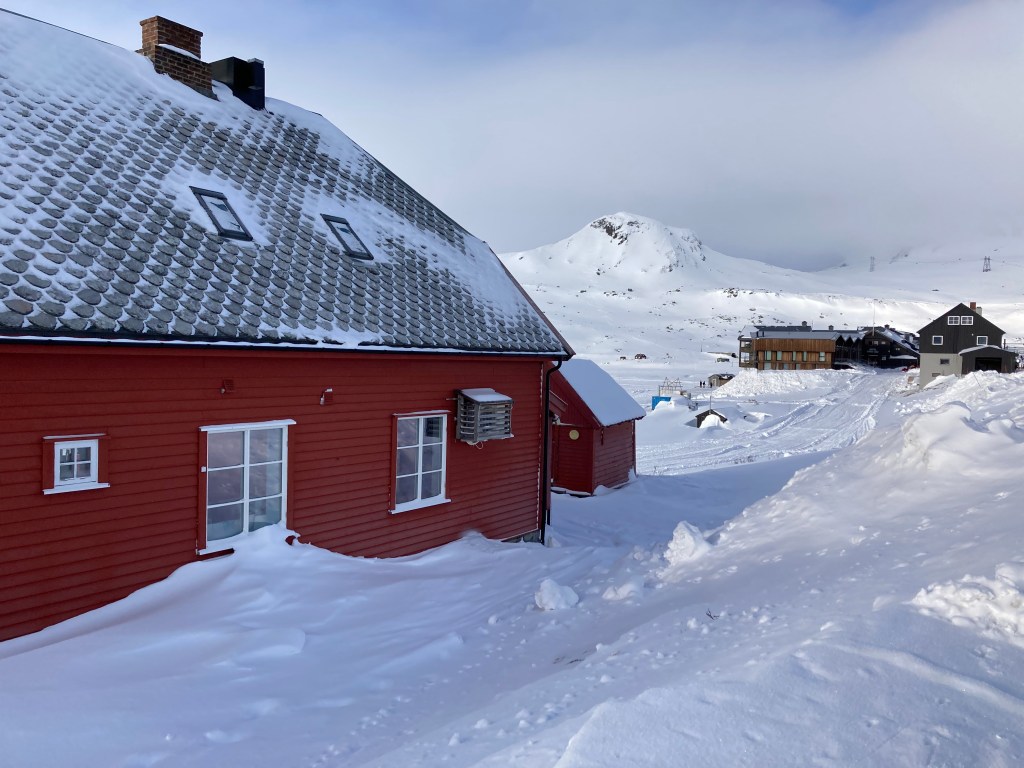
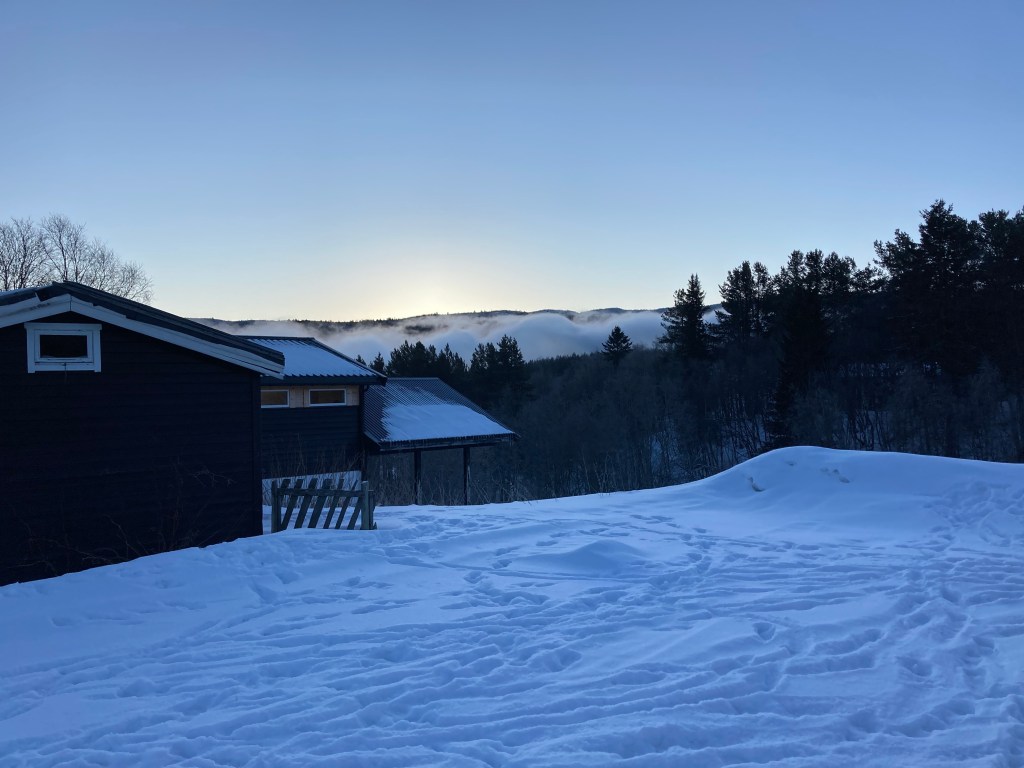
Øen Turistsenterat sunrise 12th Feb 2025. This little place just outside Geilo, where Hytter (cabins) and family accommodation can be rented is an ideal base to skiers and those wanting to explore the beautiful surroundings. The temperature was -13 ̊C when this photo was taken. The little village of Finse is the highest stop on the Oslo to Bergen railway-line. It is over 1,220 metres above sea-level and on 11th February it was under almost a metre depth of snow with drifts three or four times this depth. The daytime temperature here was -7 ̊C . Beyond and south-west of Finse lies the frozen Finsevatnet (lake) and the frozen Hardangerjøkulen(glacier) lies beyond- on the horizon. Finse lies about 26 miles west-northwest of Geilo by train. A house in frozen snow-bound Finse. The scenery on this day, 11th February, encapsulates this frozen sub-arctic landscape.Freezing dusk view about 4.15 PM on 12th February. View south-eastwards across Uvdalsåe (valley) from a dwelling on the hillside above (and east) of the village of Uvdal, about 35 miles south-east of Geilo.Sunrise on 14th February 2025. Back at Øen Turistsenter on a clear, frigid morning with freezing fog beyond the trees and a temperature of -15 ̊C. 14th February 11.30 am.Eight inches of snow-cover, blue skies and freezing air on the eastern outskirts of Geilo.
The Trip to the High Arctic
The second part of this Winter Trip was to the High Arctic archipelago of Svalbard at just north of 78 ̊N, which took place from the 16th until the 22nd February 2025. There were truly awe-inspiring views of glaciers, perma-sunrise/ sunset, snow/ ice in abundance. One night I and my two brothers (who accompanied me on the second part of this Trip to The Frozen North) were treated to a dazzling light-show of the Northern Lights. Photos courtesy of Ian Pennell, except that the Northern Lights photos are courtesy of Jill Blackstone (of Snowfox Travel).
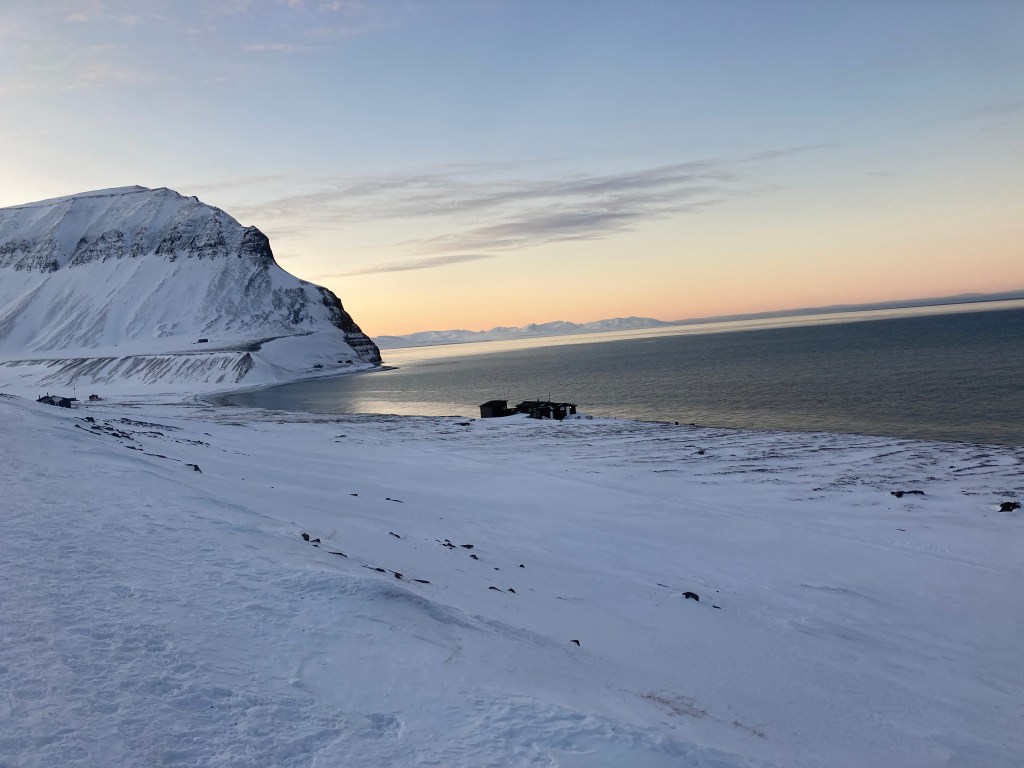
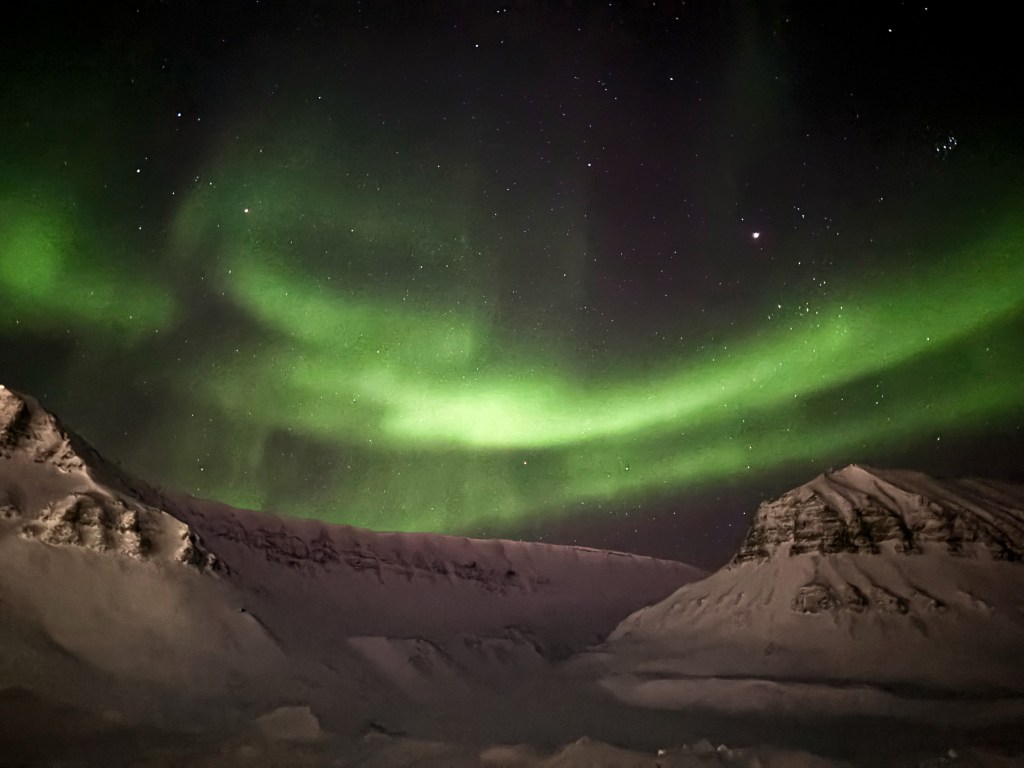
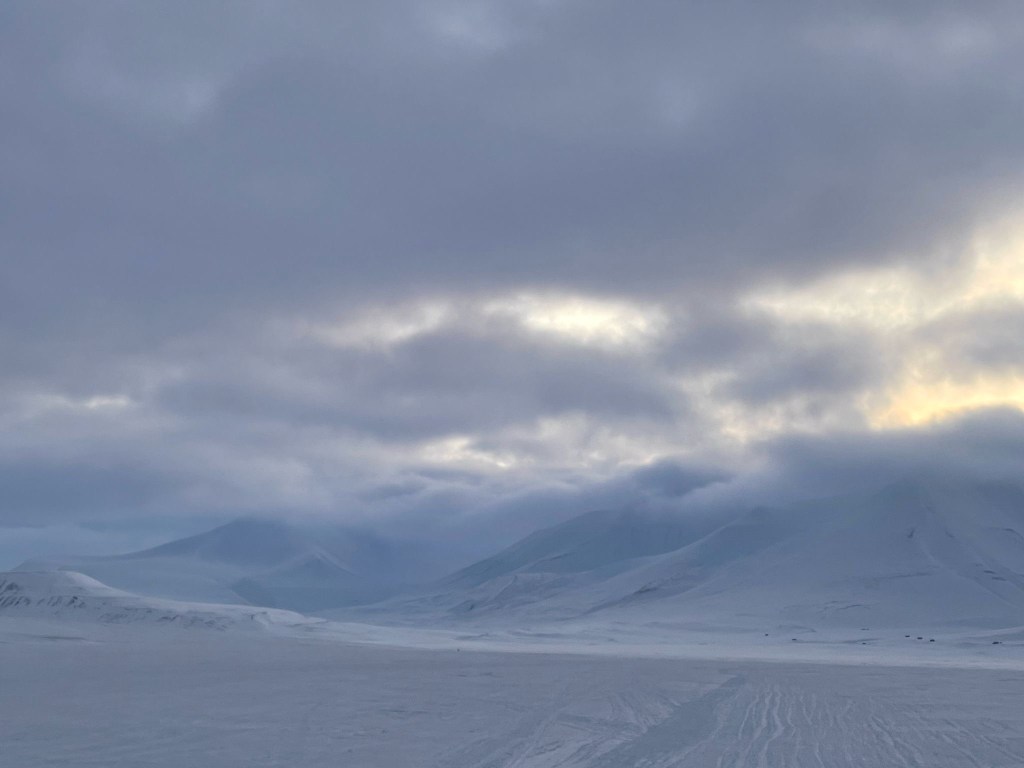
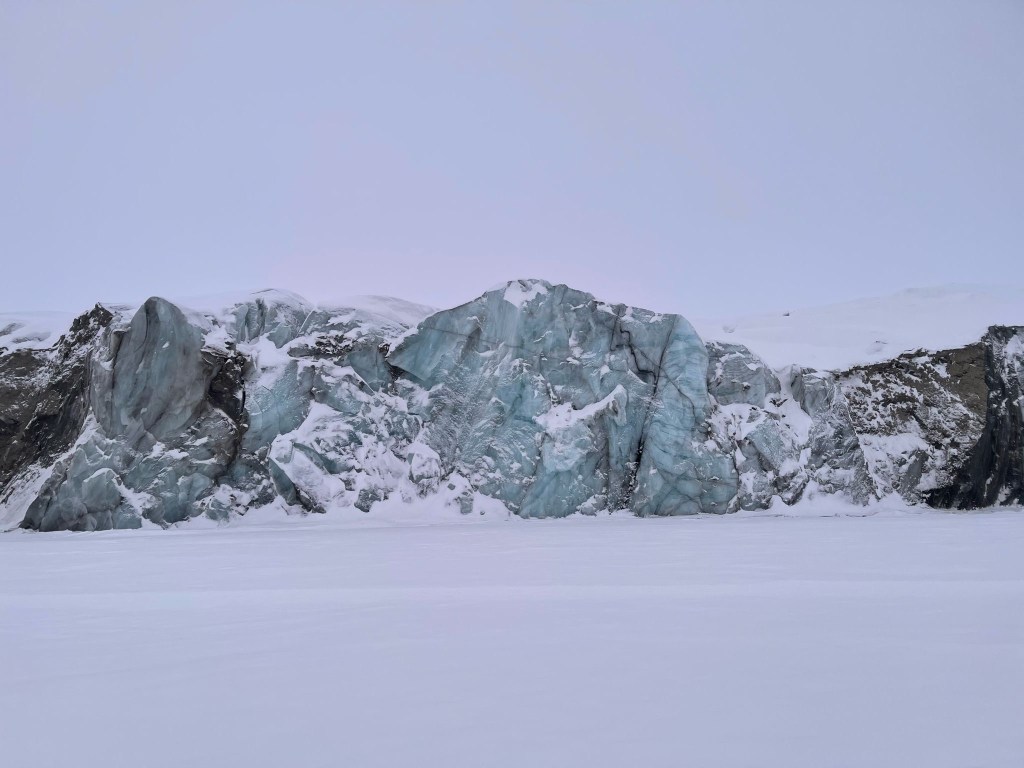
Afternoon of 16th February 2025. Arrival in Svalbard and The Frozen North. Just after sunset in Longyearbyen, the main “town” with a population of 2,400 inhabitants. It was already starting to get dark, this being about 3 PM local time. During the time in Svalbard the Sun did not get above the mountains. 17th February 2025.Frozen snowy landscape and icy seas along the coast towards Bjørndalen, a few miles south-west of Longyearbyen, the “capital” of Svalbard with a total population of just 2,400 inhabitants. The temperature was about -12 ̊C when this picture was taken.17th February. Along coast south-west of Longyearbyen, en route to Bjørndalen. Svalbard reindeer, which are smaller than their distant relatives who live in northern mainland Norway. They have smaller bodies and have adapted to the harsh climate of the High Arctic.7.PM on 17th February. The Northern Lights (Aurora Borealis) put on a fantastic light display under clear skies and over the frozen snow-covered landscape near the Gruvelageret restaurant just over a mile south of of Longyearbyen, Svalbard. The temperature was about -13 ̊C at this time. Photo courtesty of Jill Blackstone of Snowfox Travel. Evening of 17th February, near Gruvelageret restaurant just south of Longyearbyen. The Northern Lights formed spectacular green wavy patterns and streaks. Photo courtesy of Jill Blackstone of Snowfox Travel. 19th February. The epic trip on skidoos up frozen rivers and across glaciers to the east of Longyearbyen. The top end of Adventdalen, about 15 miles east of Longyearbyen. The group of us were part of a guided tour accross this frozen snowy landscape with a temperature of about -11 ̊C at 11.30 AM here. The tour-guide carried a gun because of the small risk of encountering a Polar bear, though none were seen. The Sun had not cleared the horizon and with a stiff breeze on the glacier the thick leather jackets on top of clothing underneath was very necessary. Face masks and balaclavas were also essential to prevent frostbitten noses! 19th February, about noon. Top end of Sassendalen about 35 miles from Longyearbyen, view south towards Wallenborgfjellet and approaching Nordmannsfonna (glacier). Here the wind picked up and the temperature of -11 ̊C felt especially icy to noses and cheeks not totally covered by balaclavas and scarfs. The south-east wind was here picking up snow and blowing it in a ground-blizzard. 19th February, about 2.PM. This was the terminus of the epic skidoo-trip across the glacier on the East Coast of mainland Svalbard, some 55 miles east-northeast from Longyearbyen. View from the frozen sea-surface back towards the terminus of Hayesbreen (glacier) where it meets the sea, in the bay just north of Krogfjellet (high hill of about 450 metres, near the coast). This glacier, reaching the sea, would carve little ice-bergs in the summer when the sea is not frozen. At this time, the frozen sea, with the icy blue-ice glacier as a backdrop is truly Arctic. And with an overcast setting in it was getting dark at just 2.PM. 19th February, just after midday. View north from Nordmannsfonna glacier on Svalbard. The sun at it’s highest turned the frozen mountain-tops pink but did not clear the horizon. Shortly after this low cloud and freezing fog, combined with some drifting snow created white-out conditions with the frozen landscape (snøfokk in Norwegian) which made skidoo-driving across the glacier very difficult. 21st February. These signs (in English Applies to all of Svalbard and under a picture of a Polar bear) on the limited roads just outside of Longyearbyen remind folk of the risk of Polar bears, of which several hundred live on the Arctic archipelago of Svalbard. On this day the weather was deteriorating, the wind rising bringing blowing snow. The temperature was about -6 ̊C, but it felt truly bitter and Arctic in the stiff wind. 22nd February, about 2.PM. View from the air looking east after departure from Longyearbyen airport. Lovely aerial shot of icy Svalbard and the cold Arctic waters surrounding it. The weather was relatively mild on this day, reaching around freezing-point but still not warm enough to thaw the icy landscape.
If the views of beaqutiful frozen landscapes, the magical Northern Lights and awe-inspiring views of glaciers rising from ice-covered seas piques your interest, feel free to share to your fellow Northumbrians and Geordies the frosty elixir that affirms that they are closer to the Arctic than other parts of England. Even if one normally likes warmth and sun for a holiday, a frosty affirmation of one’s Northernness can instill that sense of northern pride in uniquely Northern communities.
Norway is not difficult to get to from Northumberland. A hour’s train-ride takes you to Edinburgh Haymarket, from where you can quickly get to Edinburgh Airport from where there are direct flights to Oslo Gardemoen Airport every day. From Oslo Airport you can get a connecting flight up to Bodø, on the north Norwegian coast just north of the Arctic Circle or to Trømso which is 200 miles further north. Both these sizeable towns are surrounded by fantastic scenery.
The only real issue likely to stop travel to Norway, set to be introduced later this year or in 2026 is the new ETIAS Visa Waiver requirement for travel to the Schengen Area (which includes Norway). Those wishing to visit Norway will need to apply for (and get approval for) before travelling. Those who have messed up earlier in their lives, but are trying to make amends life now may still be rejected through the ETIAS screening process and they, along with anyone unfortunate enough to have their passports confiscated will also not be able to travel. There will be appeals processes for both eventualities, though there is no guarantee of success.
My name is Ian Pennell and I am a freelance Book-keeper. I live near Alston in the North Pennines in north-east Cumbria. I used to live and work in Lancaster until 19 years ago and have friends in northern North West England. I have two Websites devoted to campaigning for local, relevant Regional TV, one for Cumbria/ North Lancashire the other for Northumberland/Scottish-Border.............................................................................................................................. A big problem is that the Regional Television Bulletins for the North West covers the southern third of the Region about 90% (plus a part of Derbyshire which is NOT the North West of England), covers the middle third of North West England poorly and covers the northern third of North West England not at all! When I was studying at Lancaster University, I used to watch BBC1 North West Tonight because it covered areas up around where I was brought up- in northern Cumbria as well as more immediately locally around Lancaster. Then I came home one day, turned on BBC1 North West Tonight wondering why they were silent on Cumbria and discovered why: Most of Cumbria had been chopped off the weather-map! ........................................................................
...........................................................................................................................................
In rural and northern Northumberland too, Regional TV, as is received by viewers, tends too often to be Tyneside/ Wearside/ Teesside- focussed with little news locally. Communities in North Northumberland have strong links across the Border into south-east Scotland and towards Edinburgh but none of the Regional TV News- services serving Northumberland today ever goes across the Scottish Border to cover significant happenings of interest to North Northumbrians. The region of Northumberland/ Scottish Borders/ East and Mid Lothian area is vast- but it is largely overlooked by mainstream Regional TV! .................................................................................................................... ................
In two websites, one for northern North West England and the Isle of Man (a country in it's own right that does not have it's own TV service!), and another Website focussing on Northumberland, North Yorkshire and the North Pennines I make the point that Regional TV that informs viewers of important things in their local area is a Public Service that must be funded better, in order that rural areas of northernmost England get good geographic- appropriate local news-coverage.
View all posts by northwestisnorthwest










 LOOK NORTH MUST LOOK NORTH