
15th February 2026
Dear Readers
There are mooted changes afoot for Regional TV across northern Scotland: A cut to Regional TV for northern Scotland will, if it goes ahead, portend unwelcome news for viewers of Regional TV in the North-East of England, especially for those living in communities’ northwards of Tyneside.
Regional TV services, especially those focussed on large rural areas in the North of England and in Scotland are under threat from both Scottish TV (STV) and ITV.Plc- as there seems to be little done to dissuade these private National Broadcasters from making decisions solely to protect their bottom line. If OFCOM give the go-head for STV to close the STV North television operation based in Aberdeen and move all STV national and regional TV production to Glasgow, it is certain- as night follows day- that ITV will push its luck with the proposed mothballing of ITV Border Lookaround, possibly even mothballing ITV News Tyne Tees too- so that all of North East England and Cumbria could end up in a large ITV North TV Region centred on Leeds. If communities in Northumberland get little local news now, they will get almost no coverage in Regional News dominated by Leeds, Sheffield, Bradford, and Hull- and a bit of Tyneside/ Teesside thrown in!
It is fairly certain that were ITV to end up mothballing both the ITV Border and ITV Tyne Tees Regions that the southern Scottish part of the ITV Border Region will be hived off to STV with the main STV News at Six programme being presented as “local news”, with it’s 80% of coverage of Glasgow, Edinburgh and the Scottish Central Belt: Viewers in communities from Gretna to Muckle Flugga (top end of Shetland), and from Eyemouth to Stornoway will be presented with “Your local news” about Glasgow stabbings and Edinburgh drug problems. Meanwhile viewers in Haltwhistle and Wooler will get much news about Muslim racial tensions in Bradford, stabbings in Sheffield and unemployment in Grimsby. What an insult to potentially five million inhabitants in communities across Scotland and the North who will lose any semblance of sympathetic local coverage to their issues, nearby happenings, etc,!
It’s not just ITV.Plc that is likely to be making cuts to Regional TV: The BBC having to find £600 million in savings (according to recent news: https://www.bbc.co.uk/news/articles/clyzg6n7pplo), the likelihood of the BBC looking at making further cuts to Regional TV cannot be discounted. Will they axe BBC Alba, their only remotely northern Scottish TV Channel produced in Scots Gaelic? Will the BBC North-East Region get amalgamated with those for Yorkshire and Lincolnshire so that there is a single BBC Look North providing nightly “Local News” from an area extending over two hundred miles from Lincoln and Mansfield (Nottinghamshire) right up to Berwick-upon-Tweed and west to St. Bees Head in West Cumberland? Mark my words, communities from the Shetland Isles to the Scottish Borders and into Northumberland need to get ready to FIGHT for their Local News to keep it as it is, let alone to get much-needed improvements to have more localised, topically-relevant Regional TV coverage (for which communities will need to DOUBLE- FIGHT)!
So-called “Local News” would become artificial, distant and irrelevant- and most unable to encourage or foster any sense of community spirit or cohesion at a time when increased social disorder and crime, and high immigration demands a Public resource that speaks to local communities; which can advise folk how they can preserve the warmth and unique friendliness of Northumbrian communities. Hitherto their Northern beauty, their culture, and the friendliness and warm welcome, of these Northumbrian communities means that they have stood apart- unique- compared to those in other parts of England. Cuts to Regional TV remove from such programming their ability to affect any good Corporate Social Responsibility and encourage community cohesion in the communities that see the corresponding Regional TV programming.
One Size Fits All UK Programming Imposed from North Tyneside to Muckle Flugga
Communities scattered across the entire North and North-East quadrant of the United Kingdom are certain to be diminished by the loss of local news-coverage speaking to the concerns, issues and matters affecting folk living across this vast rural Region if STV gets its way and OFCOM approves the mothballing of North Scotland Regional TV. The BBC Regional News-services cover regions that are far too big to be of any good for folk living in remote communities in northern Northumberland, the Scottish Borders or rural Easter Ross in the far north of Scotland. If both ITV.Plc and the BBC follow suit, large rural areas will get no local news-coverage, and they will get no coverage of issues affecting folk’s day to day lives. People watching will not be informed about events occurring within an hour’s journey from their residences, which is considered the boundary of what qualifies as local.
There are alternative “local TV” services that folk can get off the Internet, or from Freeview/ Sky TV channels- but large areas of Scotland and the North-East, including areas that are served poorly by the proposed new STV Regional News service, the Scottish Borders and Northumberland do not have them. There’s That’s TV Aberdeen and That’s TV Tayside (Freeview Channel 8) that viewers in those parts of North-East Scotland could fall back on. These provide ten minutes of very local news at 6.pm on weekdays. There are also online You Tube sites like The Orkney News (link here: https://www.youtube.com/c/TheOrkneyNews) providing local news-clips for the Orkney Islands just off the north coast of mainland Scotland, but this hardly constitutes a sit-down-and-watch bona-fide local TV News service!
Of course, Northumberland does not have anything approaching a local TV service. There is, of course, NorthumberlandTV which is a You-Tube based channel- mostly related to Northumberland Council (link here: https://www.youtube.com/northumberlandtv), Hexham TV is more community focussed (link here: https://www.youtube.com/channel/UCk0s7GfPKbVGRHHjPTH_BcQ), but largely aimed at a younger audience, and not much good if you live in northernmost and coastal Northumberland. Neither are actual TV services that you can sit down and watch on your television, and they just have short news-clips, about one news-feature a day. Both Northumberland and the Scottish Borders remain very poorly served by topically and geographically appropriate news and documentary coverage. Local news-coverage for Northumberland is only likely to worsen further if ITV.Plc and the BBC take their lead from STV and OFCOM approval for cuts to Regional TV for Northern.
Wider Regional Affiliations: The Norwegian connection
The other significant issue, and it is becoming more of one, is that the wider regional connections that communities have (or wish to have) change dependent upon where in the country one resides. That is, beyond places that are local, there are places where folk like to visit for short breaks, like to go on holiday, find work, or have family and friendship connections. As such, Regional TV may not be the most appropriate format, but Regional TV documentaries (or TV documentaries just for Scotland) are certainly appropriate for news about holiday destinations, regional areas, and cultures of interest to viewers. Communities based in rural northern Northumberland- or in the Shetland Islands- will not have the same wider regional links that folk living in Glasgow, Leeds or London have.
I have covered in other articles on this Website how folk living in North and East Scotland and Tyneside/ Northumberland have ties with Norway, in terms of cultural ties (especially with folk music, involving pipes and fiddles), because of the shared connections on both sides of the northern North Sea with regards the fishing, oil and gas, and renewable energy industries, and the fact that western Norway is the short-break destination of choice for many Northumbrians and Scots. Folk living in Manchester, in Birmingham and London may consider Wales and the English South-West or go to Paris for a few days. But the ties, the friendships and even the language used varies sharply across the country.
The one-size-fits-all imposition of National and so-called “Local news” upon remote communities in Scotland and the English North-East that says “You live in the United Kingdom, so must put up with London-centric National News” or the revamped STV News at Six effectively thrusting Glasgow down the necks of Orcadians and Shetlanders does not (and will not) go down well! North Northumbrians have had both BBC1 Look North and ITV News Tyne Tees thrusting Tyneside and Teesside down their throats for years when they may prefer to visit Edinburgh for a shopping trip or to go to Hogmanay on New Year’s Eve. This is the imposing on communities of regional affiliations that are arbitrary and fake, simply because Broadcasters are not required by Government to provide Regional News-services and documentaries at a scale that would ensure that everyone in the North has access to topically and geographically relevant local news and documentary programming sympathetic to communities’ needs.
Folk in Orkney and Shetland do not want to know about Glasgow and its drug problems and gang-warfare. They care even less about London, and it is certain that most Shetlanders or Orcadians are not keen on East Enders. In terms of music it is a fairly safe bet that they are not into Duo Lipa, Bruno Mars or Taylor Swift. And Shetlanders have enough local vocabulary peppered with Scandinavian words to appreciate Sweden’s ParkAJoki’s Jul I Norr Album (that’s Swedish for Christmas in the Rural/ North- of Sweden), or Mia Elfqvist singing about her Vita Boots (White Boots), or Norway’s Monika Nordli singing one of her romantic hits with her country-flavoured music. Shetlanders would certainly find it less painful on the ears! Shetlanders might prefer the Norwegian Police-detective series Wisting, featuring a Police-detective called William Wisting who has a daughter called Line (pronounced Leeen-uh), a journalist whose stories sometimes impinge on her father’s investigations.
A 2021 Reddit discussion between a Norwegian and Scots highlights Scots’ desires to separate from the UK. There is no evidence that this discussion just involved folk from the North of Scotland and there were three or four Scots involved in the Reddit discussion- so it must be considered representative of a wide cohort of the Scottish population. The link to the Reddit discussion between the Norwegian and some Scots is here: https://www.reddit.com/r/Scotland/comments/ofrbgl/hello_i_am_a_norwegian_and_i_just_wondered_if_the/. There was a keenness in this discussion for Scotland to be part of the five Nordic group (Norway, Sweden, Finland, Denmark, and Iceland) and not to be part of the UK -seen as badly governed. Scots contributing to the discussion mentioned Brexit, concerned that this would disrupt the country’s connections with Scandinavia and make travel to Europe more difficult.
It is worth reflecting on whether STV and the BBC understand the significance of these Scottish/ Northumbrian- Norwegian relationships at all, particularly for those living in the far north. It is interesting to consider how much STV and the BBC appreciate the extent of these ties (especially for northern Scotland), and the extent to which Northern Scots might jump at the chance either for their region to be independent of the UK or for themselves to move to Norway or Sweden (which comes up in the Reddit discussion referred to). People do not want to move to a neighbouring land seen as run much better nor do they want for their region to become independent from the country they reside in- unless they are really unhappy with the country in which they are governed.
Here we are talking about a level of disdain for Britain that would switch some folk in the most northerly remote communities from being English/ Scottish/ UK Team supporters in the World Cup or the Olympics to being supporters of the Norwegian/ Swedish teams: It takes an awful lot of pain, betrayal and hurt to make normal folk want to disassociate from their own country and throw their identity in with another adjacent country (however well that adjacent country does). But there are undoubtedly folk in Scotland who don’t want Scotland to be part of the UK, but to be in a closer union with Scandinavian countries. This is what is happening, and Scottish broadcasters fail to see it happening (or they don’t want to).
If Britain were seen as well-run, if the Government protected people from harm, and was not seen to threaten those who express pride in King and country people would not want to leave a country that they have been born and bred in. If folks local rural Public services were maintained, and communities supported, and they were given a forum (in terms of local TV) to voice their issues affecting their remote Northern communities they would not be angry enough to issue the equivalent of Divorce Proceedings agaist their own country- and/ or move away from the only community that they have lived in all their lives. It takes a lot to make folk pack their things, sell up and wrench themselves away from communities where they have lived all their lives, and where their parents and grandparents lived. The fact that any of this is happening at all is a sign that folk have given up on their government and now consider the country they are a part of with disdain: This is not something that has happened in a vacuum.
The issues that contribute to folk in Scotland and Northumberland wanting to wrench themselves away from the area that they have been brought up in and move abroad; or for their area to be separate from the UK are the topics of concern that would be covered- in depth- in a good localised Regional TV service or in documentary programming. These issues are:
- Declining Public Services and loss of local amenities like Banks, Post-Offices, and shops.
- Loss of local rail and bus-services to towns.
- Higher taxes on (and less support for) rural businesses like farming, fishing, or the hospitality sector.
- Demographic changes caused my movement of folk from the South and from Immigration weakening and diluting the unique warm, friendly, and selfless communities that they were in the past.
- Rising crime and antisocial behaviour exacerbated by (4) and contributed to by the closure of rural Police Stations and the Police being less keen to follow-up these kinds of crime.
- Increasing local poverty and job insecurity.
- Local infrastructure falling to bits- potholes on roads.
- The sense that local and National Government does not care about their needs and concerns.
- Difficulties in voting for change, and a sense that the current Labour Government is anti-democratic, cracking down on free-speech and delaying local elections.
- Increased storms and flooding in winter, but less snow in winter. The character of the landscape changing and a loss of that which made the countryside around breathtaking and special.
- The loss of Christian values, where folk in the community looked out for each other, the sense that nowadays everyone is selfish and will not look out for neighbours.
- Increased incidence of very violent crime up to (and including) murder in the community or in nearby communities, with the perpetrators seen to get derisory prison sentences.
These twelve factors impact the most northern rural communities in Britain, and collectively, they can prompt families to leave their lifelong homes and relocate overseas. When people experience these issues firsthand, they become even more motivated to move away for good from the communities where they grew up. Yet Regional TV does not cover some of these issues because they focus more on the built-up areas where more people live, and discussion criticising youth violence, immigration or Christianity is liable to cause offence (or be considered to cause offence to youngsters, immigrants, Muslims and atheists and broadcasters don’t want to be sued so these issues are not covered.
And now STV is about to fully impose Glasgow and Edinburgh on the good citizens of Lerwick, Baltasound, and Stromness, that will be their “local news”. National News will mostly be about central and southern England. Shetlanders should start a petition to be able to watch the Western Norway Regional News Distriktsnyheter Vestlandsrevyen (that’s District News- Westlands Review in Norwegian)- broadcast from Bergen: One can watch Vestlandsrevyen on the Internet about an hour after it has been broadcast live on NRK from this link: https://tv.nrk.no/serie/distriktsnyheter-vestlandsrevyen. Shetlanders should not have too much issue brushing up on Norwegian, which is not so different from their own Shetlaen: Then they can follow Distriktsnyheter Vestlandsrevyen and make a point of boycotting STV altogether! If you know anyone who lives in the Scottish Northern Isles do let them know that if they do this, they should write to STV Broadcasters, based in their offices at Pacific Quay, Glasgow that they think Distriktsnyheter Vestlandsrevyen provides more “Local News” than the new proposed “Local News” service from Glasgow (and mostly about Glasgow), Also folk need to let STV broadcasters know that Shetlanders and Orcadians have often had more wider regional affiliations with Bergen or even Oslo, than with Glasgow. It is a message that STV broadcasters in their Glasgow offices need to hear loud and clear!
For Northumberland and the Scottish Borders, it is difficult to boycott both mainstream Regional TV services because, despite their being appalling in terms of local coverage and with regards one’s own wider regional affiliation they are the best on offer! However Regional News and Documentary programming is very Tyneside/ Teesside- focussed and, in the case of National coverage, mainly covers the 250 miles from the M62 Corridor down to the South Coast of England. For folk living in Seahouses, Berwick-upon-Tweed or Wooler the news-coverage is irrelevant both topically and geographically. It does not speak to their needs, not is it likely to cover some of the places that they like to visit, or the cultures/ people-groups that they might more readily identify with.
Communities North of Tyne also need to make their views about Regional News and programming, that it does not cover their areas, topics or places of interest and seek to source more relevant local news where they can: The Local News programme That’s TV Lothian provides ten minutes of localised news covering Edinburgh, Lothian, and the Scottish Borders and it is available on Freeview Channel 8 (link here: https://www.thats.tv/lothian/). If you live in northernmost Northumberland and an get a TV signal from the Selkirk transmitter you should be able to get this programme which, on aggregate, will cover more places of interest to you than ITV News Tyne Tees where (at best) 15% of coverage gets north of the River Tyne- over sixty miles to the south. One could supplement that with the largely Northumberland-Council focussed clips from Northumberland TV (You Tube) to get news about Northumberland (link here: https://www.youtube.com/channel/UCRjaNG8hxEey9jHfGPaSuVg).
Additionally, wider regional links for folk living in the Scottish Borders, Northumberland- and indeed as far south as Hull (at least along the East Coast) differ from what the BBC or ITV.Plc National broadcasters might decree appropriate. These wider regional links extend across national boundaries at the most Northerly fringes of the United Kingdom, in ways that neither Government, nor the local or broadcasting authorities seem to realise. Not everyone in Britain has interest in American Culture, pop-music and films if they have interests of what happens outside of the UK, neither do all Brits who go away for a holiday abroad always head to France or Spain. As with northern Scotland there are cross- border links between North-East England and Norway- in terms of business, culture, and even local dialect. For example, for 55 years, there has long been an arrangement with the Voss Ski Resort in western Norway and schools on Tyneside and in Northumberland- whereby kids get access to a week’s skiing (link here to find out more: https://vosshostel.com/en/school-groups/). There are also links between Northumbria, Scotland and Norway through folk music, which is a major part of the popular music culture in these areas which I cover in more detail in this article: https://looknorthmustlooknorth.org/2025/07/28/music-and-cultural-links-between-northumbria-scotland-and-norway-and-the-etias-implications/.
Both the BBC and ITV.Plc make an implicit assumption that no Britons anywhere are interested in listening to anything that is not in English. That is clearly not true, as the folk in northern mainland Scotland who listen to music or news in Scottish Gaelic demonstrate. The BBC must know this, which is why they offer the Gaelic BBC Alba channel, and many more Scottish folk than those fluent in Scots Gaelic watch it! Shetlanders have their own local language Shetlaen, which is half-way Norwegian and they use words like bairn (for child), aald (old), bairnly (childish), ken (know), dey (they), røts (roots), idee (idea), at (that). Even along the East Coast as far south as Hull folk have their own dialect with a good peppering of Norwegian-like words which they use like bairn, fell, beck (stream), laik (to play), gate (pronounced gaat-uh– means street). Millions of older folk living in Britain listen to traditional Classical Music which has an opera singer or two often singing in a language other than English. The only programming that the BBC produces in a language other than English tends to be of a South Asian language- with programming specifically catering for immigrants from those lands for whom the BBC knows that English is not their mother tongue. Indeed, BBC Local Radio stations serving parts of NW England and the Midlands have their own dedicated Asian Network slots: How about a Scandinavian Culture slot for BBC Scotland, STV and the ITV Tyne Tees and Border Regions?
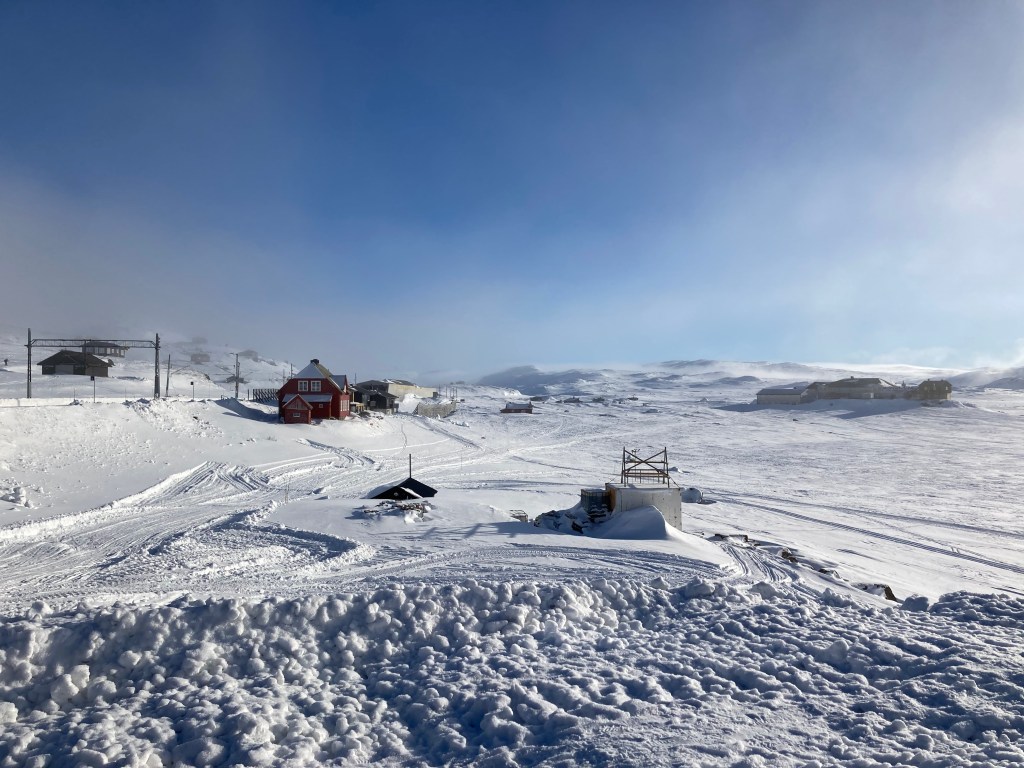
If one can find alternative Regional News, possibly even the Norwegian National TV News Dagsrevyen, (that’s The Day’s Review in English) because you have connections with Norway do so (link here to watch from Internet: https://tv.nrk.no/serie/dagsrevyen): Be sure to let Regional TV broadcasters based in Tyneside know why you will not be watching North-East Regional News anymore, tell broadcasters what you will watch instead. If enough folk can do that, they will put pressure on broadcasters in a way that will encourage broadcasters to provide more local news-coverage for remote Northern communities, and to provide wider Regional programming appropriate for Northernmost rural communities.
Both National and Regional TV Broadcasters serving North and North-East Scotland and North-East England need to be made acutely aware that they are not serving the northern half of the UK, that bit northwards of the M62 Corridor, with anything like appropriate news or documentary content. Folk must write to their MPs to complain about London-centric or South-England-centric documentary and news coverage, and the need for there to be distinct programming across News and Documentary programming. More Regional TV costs money, for which the Government could provide finance. There would need to be a strong legislative safeguard in the BBC Charter that allows reporting without fear or favour from politicians- but there does need to be Public money raised from taxation to help support what is really a vital Public Service for rural communities- Good, Local, and relevant Regional TV. There also needs to be political pressure on Broadcasters to provide this service. This starts with the viewers of Regional TV banding together in their communities and campaigning for change.
“But You Can Get Local News from the Internet and Local Newspapers”
National and Regional TV broadcasters often trot out the line that viewers can get Local news from the Internet or from local newspapers. That may be true to a point, but local TV News provides visual impact and coverage for folk who may not have good Internet access, who may not have a computer and for whom the local newspaper is not interactive, it’s not so easy to find what is important or directly relevant. There is something about sitting down and watching the news from the TV that conveys sympathetic impact, especially from a news-reporter in-tune with folks’ needs and requirements, and along with live footage shows the viewer what is happening in their community there and then. Printed text on a page, where one must wade through to find out what is happening, is not so good for folk who might be tired at the end of a busy day, or for the elderly. Local radio can be useful, but without visual footage and commentary it can be harder to follow and leaves less of an impact on the listener: Sadly, BBC Local Radio has been cut in the last few years, and listeners in Northumberland now must put up with news about Teesside and Cumbria much more often!
There is a place for getting good local and relevant TV news-coverage: Remote communities are less informed, less served without someone informing them of what is relevant and important to their communities, and what is presented is arbitrary and distant to viewers if it comes from folk who lack any understanding or appreciation of their viewers. If broadcasters, radio presenters, or columnists in local papers lack the ability to communicate in the language of, or sympathetic to, the needs of the communities served they fail to provide a meaningful and useful service. Newspapers and Internet articles lack this touch, and radio is a limitation when you cannot see the smile and body language of the presenters or pictorial coverage of the news or documentaries.
Unfortunately, Local Print, Local Radio, and Regional News covering large areas that fails to connect with the communities they serve suffer falling viewers: Broadcast or print media then use the excuse of falling viewers and readers as an excuse for further cutting Regional News or local newspapers. No, Regional TV must cover the communities they serve properly, and the programming must hit home with these communities: Otherwise, it is no good. This requires Government legislation to put stipulations on National broadcasters to provide a higher Minimum Spend on Regional TV provision, to fund more of it, have more and smaller TV Regions and to provide Regional Documentary programming.
Northumbrians and Northern Scots are Angry and Want Recognition
People living in numerous rural regions across northern UK often feel their concerns are ignored. They observe an increase in crime within their communities, alongside changes that they perceive as negative and potentially threatening. In remote, forgotten rural areas folk are growing old with memories of the beautiful landscapes, and friendly tight-knit communities of years gone by- and yobbery and anti-social behaviour now dominate. People relocating to these regions from the South, Immigration from Asia or Africa introduce values, perspectives, and behaviours that differ from those they were accustomed to growing up. Bus services get cut, roads drop to bits, and bed and breakfast business struggle against rising taxes and declining footfall because of anti-social behaviour. Farmers in the Northern fells of Northumberland and Northern Scotland still struggle with cold wet weather for much of the year, poor harvests and tight margins- but with the added impetus that they are taxed more and supported less, and thefts from farms are increasing but the Police never seem able to find the perpetrators.
And today, it seems that both National and Regional TV broadcasters barely ever mention their areas, let alone have any sympathy for the plight of those living in parts of Northumberland and Scotland far from the cities.
People have lost their communities, or are fighting to keep them, and they would like a sympathetic face between 6.pm and 7.pm each evening, friendly advice, and a shoulder to cry on. Police often do not intervene when individuals are harassed by juveniles in public. Despite rising taxes, hospitals have long waiting lists, so if someone is attacked or suffers an accident and gets injured, they may have to endure pain for weeks or even months. Local libraries, banks, and dentists close, and it is miles to drive over pot-hole cratered roads to find these services. And to cap it all the “Local” broadcast media covers knife-fights in Glasgow or ethnic tensions in Teesside, seemingly oblivious to the needs and the concerns of their more Northerly rural communities.
The current scandal-riven Labour Government- based hundreds of miles away in London- seems far too pre-occupied and aloof to address the needs of remote Northumbrian or Scottish communities. On the contrary, if you so much as post a tweet about immigration or Muslims on Facebook, the Police are likely to call round to arrest you for “Wrongspeak”.
People are frustrated with both the London and Edinburgh governments, and many are considering leaving the country altogether.
Even now, the wider Regional affiliations of many in these northernmost quadrant of the UK are not with any other of the UK that many have come to hate- but with Norway or Sweden where- at least out of the cities- one finds friendly communities, rich culture including fantastic music, and beautiful breathtaking scenery (with lots of snow and frost in winter). Neither Norwegian nor Swedish are difficult languages to learn, but the practicalities against a wholesale move to these beautiful Nordic countries remain local immigration requirements. And later this year, the entire European Schengen area is introducing their own Visa Waiver Scheme (ETIAS) to screen travellers from the UK before they even set foot on European soil: This also applies to those wanting to visit Norway or Sweden- and anyone with a history (even biffing a yob for threatening your family- a likely possibility these days) is liable to be denied an ETIAS and won’t be able to visit Scandinavia.
The wider pan-regional connections between Scotland and North-East England and Norway/ Sweden are significant. Travel from this northern part of the UK to visit friends, family, and colleagues in Scandinavia will likely become more difficult because of ETIAS. As a result, even traveling to Norway and Sweden for visits will be challenging—making permanent relocation there even harder. For deeper insight into how the new Visa Waiver System for Europe (ETIAS- due to be brought in in Autumn 2026) will impact travel between Scotland/ NE England and Scandinavia check out the article where I discuss these matters in depth (link here: https://looknorthmustlooknorth.org/2024/09/21/the-new-european-etias-travel-authorisation-scheme-and-the-impenetrable-fortress-wall-this-will-put-in-the-north-sea-between-northumberland-and-norway/).
Other folk want to fight back against the rising tide of lawlessness, to try and preserve their rural communities but do not know how to do so without getting arrested and put in jail. Is it possible for a Community Group to set up and start making citizens arrests of thugs and burglars when the Police do nothing- and to march them to Police Stations without members of that community group facing arrest oneself? What about Self Defence classes. Can local communities mobilise together in protest to a) Get the Police to deal with violent crimes reported to them and arrest the offenders and b) Stop the Police coming down hard on those who use minimum violence to protect their families and properties from yobs and vandals- but to primarily go after the yobs and vandals. These are all things local rural communities in Scotland and Northumbria might consider- which I have covered in depth in this article: https://looknorthmustlooknorth.org/2026/01/28/the-tide-of-lawlessness-threatening-north-east-england-in-the-next-few-years-regional-tv-broadcasters-say-nothing/.
But just who, which broadcasting organisations are speaking to folk in the remote Scottish and Northumbrian communities and advising them of what do to. As I cover in the article just referred to, Regional TV broadcasters dare not even mention some of the above issues for fear of censure, even though they really should and advise the viewers they serve accordingly. Regional TV should serve local communities, made up of real people, not merely the places that are broadcast to.
Rural Communities across Far Northern Britain Need a Voice to Articulate their Concerns
Regional TV, if it is effective and localised, helps to improve democratic accountability for those in power with regards to what happens in (or adjacent to) their communities. The concerns of a fisherman and his family on the Moray Coast or a hill-farmer close to the Cumbria/ Northumberland border are a world away from those of a banker in the Square Mile, or a newly arrived Pakistani family living in Birmingham, yet they get the same BBC Six O’Clock News, the same Panorama documentary, both ITV1 and STV show Coronation Street at the same time. For both rural North-East Scotland and northern North-East England Regional TV is irrelevant and remote to day-to-day concerns. And it now looks like the so-called “Local News” will become ever more relevant. Folk living in those remote Northern communities have every right to feel ignored, insulted and neglected- because they have their communities with their own challenges, concerns, and aspirations- but they have imposed on them news, issues and concerns that are most definitely not theirs!
In Northumberland, but particularly in northern Scotland there is increased interest in (and a desire to) maintain links with Norway or Sweden. Even the Scottish Government has a permanent office with the Nordic Council based in Copenhagen (link here: https://www.gov.scot/publications/international-offices-guide/pages/copenhagen/). This demonstrates that Scottish links with Scandinavia are real and growing. The Reddit discussion between a Norwegian and Scots folk referred to above, the arrangement between Northumbrian schools and Voss Ski Resort, the folk music and the linguistic connections are all evidence of these ties. And yet broadcasters remain silent on this.
Communities in far North and in North-East Scotland, in the Scottish Borders and in Northumberland need to fight to get better local TV tribunes and champions of their communities. Local communities certainly should not allow National Broadcasters to cut Regional TV services that were barely good enough before- but which will soon not be serving the interests of their communities at all! Communities need to come together to campaign with placards, outside the STV offices in Glasgow and outside the ITV Tyne Tees and Border offices in Gateshead if need me. Cuts to Regional TV should be denounced and petitions should instead be made for better, geographic-appropriate Regional News services. Regional television programming should also address broader regional connections: north Northumbrians have links with Edinburgh and the Scottish Borders, while northern Scotland has ties to Norway: Recognising these pan-regional affiliations would better serve audiences in these areas. Communities should not accept imposed on them coverage about places and regions that they have little interest in- but if they come together, they can fight for it.
Remote Northern communities need a broadcast tribune and champion for their communities, expounding what they need, what they are concerned about and their dreams and hopes. Broadcasters should then provide sympathetic local coverage, and offer solutions to the issues raised, and allow the viewers to give feedback on matters close to their hearts. If Northern Scotland, the Scottish Borders, and Northumberland do not have such local TV broadcasters which truly champion local communities it is incumbent on communities to stand up and fight for it.
On a last point, if there’s anyone technically minded and could set up an Internet-based Local TV service with news who live in Northumberland/ the Scottish Borders and Northern Scotland it is time for you to step up to the plate: A crucial public service is missing in your community—and the surrounding areas—but you could be the solution! If you have the resources and technical know-how to set up a fully-fledged TV service so much the better. Then local folk could properly boycott the established Regional TV services that do not give a monkeys about remote Northern communities.
 LOOK NORTH MUST LOOK NORTH