
30th May 2025
Dear Readers
Readers of this site will be aware that this website is dedicated to the cause of folk living in Northumberland and the Scottish Borders who need a TV news- service that provides local news, covers their areas of concern and which touches on the wider Regional links that are relevant to them, not to folk living in Thirsk, Carlisle or Middlesbrough. This concerns Regional TV output as well as political or documentary programmes which – at a Regional level let alone a National level have little relevance or interest to rural communities in the foothills of the Cheviots or coastal communities within sight of Holy Island.
There is a real need for folk living in rural northern Northumberland, the Scottish Borders and East Lothian for folk to have their own Regional TV, and beyond that their own Regional Programming. And aside from ITV Border (Scotland), which despite purporting to cover the Scottish Borders mainly covers Cumbria and south-west Scotland (which together account for about 75% coverage in the nightly news programme Lookaround). The political programming such as Border Life and Representing Border tends to focus on Scotland-wide political developments, and for folk living in places like Duns and Eyemouth is often not very local. For North Northumbrians who might be interested in developments related to Northumberland and the Scottish Borders, their choices are ITV News Tyne Tees or the political programme Around The House which is broadcast monthly, and which covers the entire ITV Border- Tyne Tees broadcast areas. Much of the news- coverage is about Teesside, Durham and North Yorkshire, which is not local- and south of- places like Seahouses, Wooler and Berwick-upon-Tweed.
There is even less point in switching over to the BBC, where the Regional TV choices are BBC Reporting Scotland and BBC Look North (NE/ Cumbria). The former covers all of Scotland, so is- with it’s Glasgow-heavy coverage and coverage of locations further west and north-west – is not local to folk living in Jedbergh, Duns and Eyemouth though there is usually some coverage of the Edinburgh area within an hour’s drive of these locations. Secondly BBC Look North also covers Cumbria and much of North Yorkshire, with reduces the amount of North of Tyne news-coverage to about 10%.
For viewers living in towns like Cornhill-on-Tweed, along the north Northumberland border, switching over to BBC1 Reporting Scotland may, nonetheless provide more local coverage (of Edinburgh and the Borders) than BBC1 Look North (covering Northumberland). And, in the absence of any realistic changes to Regional TV, watching ITV News Tyne Tees (which has slightly better coverage of Northumberland), then switching over to BBC1 Reporting Scotland (for coverage of Edinburgh and the Scottish Borders) offers viewers in far northernmost Northumberland the best option for getting the most local news-coverage.
Regional News and Documentaries are not Topically-relevant either
But that really is unacceptable for half a million folk who live across massive rural area covering almost 10,000 square kilometres, more than this if one includes eastern East Lothian up to North Berwick. And yet there is not one Regional TV station specifically focussed on this huge area. A farmer living in the Cheviots is not concerned about pollution in the River Tees or tourists in the Lake District, he is concerned about lamb sales locally, the persistence of cold wet weather in the hills in spring-time affecting his animals. Fishing communities near Seahouses and Eyemouth are more interested in the weather in the northern North Sea, whether the Norwegian authorities will be happy if they venture far enough north-east to fish, and how much recent legislation allowing more EU-based trawlers to encroach the eastern maritime border of their fishing grounds will impact upon their trade: These same communities are less interested in Diwali festivals for Indians living on Tyneside or the Tour of Britain in the Yorkshire Dales.
This entire area, extending from over 300 miles and up to 400 miles by road from London, gets broadly the same National News and Documentary Programming as anywhere else in the country- London, Plymouth, Birmingham. Rising knife crime in London, ethnic tensions in Manchester, or beach pollution in Torquay (over 500 miles away from Berwick-upon-Tweed) is not something that vexes folk living along the Northumberland- Scottish Border. This is not acceptable and reflects a need for more Regional Documentary Programming aimed at different parts of the country.
Wider Regional Links are Different for North Northumberland and the Scottish Borders
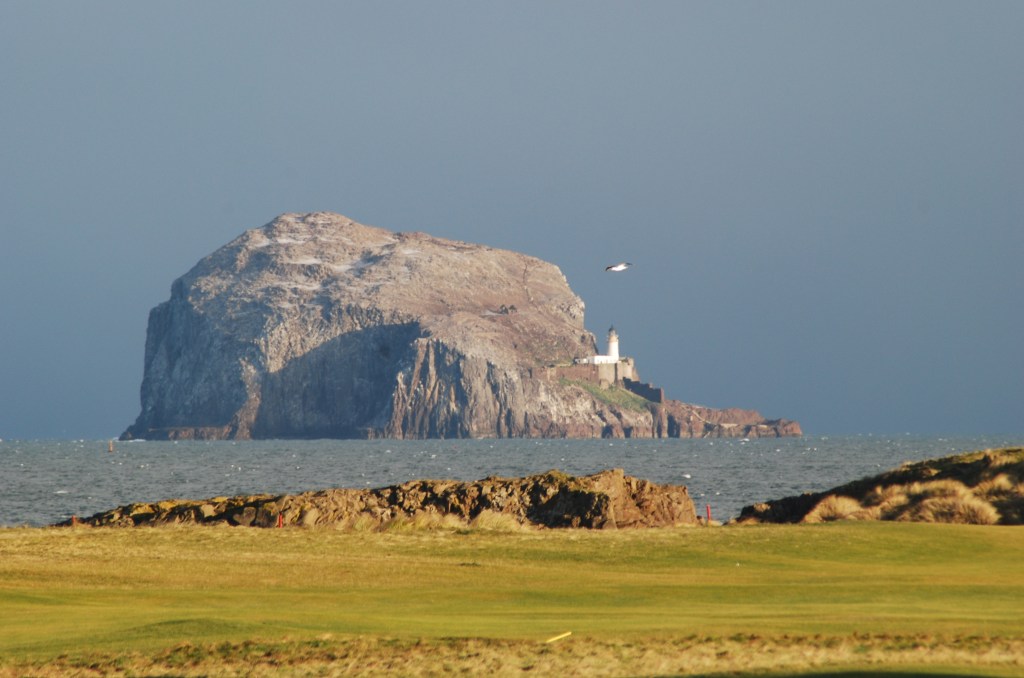
Even within a region such as North East England, the places that are not immediately local but that folk tend to visit on days out or if they go on a short weekend break vary immensely. Folk living in the Teesside area like to visit the North York Moors and Yorkshire Dales though they may head to York or Newcastle if they need to go on a major shopping trip. Further north-west folk living in the Tyne Valley may choose Carlisle or Newcastle, and are liable to visit the North Pennines, the North Lakes or Kielder Forest for a day out. For folk living in the far north of Northumberland, Edinburgh is as likely to be a choice for a major shopping trip, the Lammermuir Hills and North Berwick- and a boat trip from there out to the Isle of May where the Firth of Forth meets the North Sea may be the idea for a nice day out, and a weekend break for a Berwicker is more likely to mean a trip to the Scottish Highlands.
Wider family connections and colleagues in relation to work that requires significant commuting also change. People are tied to their local areas, though less than in previous decades, though if family members marry, go to college and move away it is often not to places more than an hour’s travel time distant. There are, through work and family relationships, strong links between North Northumbrians and folk living in the Scottish Borders- Just as there are strong links between Tyneside/ Wearside and southern Northumberland and County Durham because folk living in Hexham or Consett, for instance, commute to Newcastle or have children at college there.
The wider regional connections for folk living in this large area of north-eastern Britain are with Edinburgh and the Lothian area of Scotland, and North East England- specifically Newcastle. However the far north-eastern location, adjoining the North Sea and the fact that many communities along the North Sea Coast north of Newcastle up into Scotland are invested in fishing, off-shore wind, the remnants of the oil industry bring workers into contact with Norwegian and Danish colleagues and companies. An example of a new offshore wind development is Berwick Bank Wind Farm, some 40 miles north-east of Berwick out in the North Sea, which local folk will be employed in (details here: https://www.berwickbank.com/project). Suffice to point out that cross-border and wider Regional links here don’t mean the French border in the English Channel nor the Irish border in the Irish Sea, which is scarcely recognised in Regional News and documantaries this far north-east.
Cultural and Music links
The local and wider regional links that markedly differ across this huge area compared to areas of Britain further south extend to cultural areas, including music and sport. For instance, Berwick-upon-Tweed is unique in that it has a football club Berwick Rangers Football Club that plays in the Scottish Lowland Football League. Berwick-upon-Tweed was also the administrative centre for the old county of Berwickshire, most of which extends across what is now the north-eastern end of The Scottish Borders. This alone demonstrates that historical links with North Northumberland are not necessarily towards Tyneside or even the south of Northumberland, but to the north across the Scottish Border, a fact that is scarcely recognised on behalf of Northumbrian viewers.
Then there’s the music industry. There is a considerable overlap between folk music which has it’s roote deep in many communities in Northumberland and with Scotland- and indeed Norway which also has some excellent folk musicians. The bag-pipe features significantly in a number of music bands in Northumberland, almost as much as Scotland. For instance, there’s Kathryn Tickell, Alistair Anderson, and Jez Lowe who are folk musicians who play pipes and specialise in folk music collaborating with both Northumbrian and Scottish folk- musicians and bag-pipe players. Other musicians Vesterveg and Hekla Stålstrenga have, for example, links with both Northumbrian and Norwegian folk music.
Again, this is something that is seldom covered in broadcast media, not even Regional TV which fails to recognise that North Northumberland and the Scottish Borders has wider regional affinities and local interests that often do not match with that of counties to the south and west.
Additional Spending on new TV Regions and Regional Programming is vital
Regional TV and programming performs an essential Public service, engaging local viewers and communities in a way that the Internet, Print Media and Newspapers do not. If Regional TV covers the local area, viewers of Regional TV programming are informed of important things happening locally, topics covered are those affecting the local area like those impacting Fishing, Farming and offshore Energy (that locals may be employed in). The almost- interactive nature of Regional TV, with presenters who have good knowledge of the local area and community concerns and live pictoral coverage of relevant events that viewers don’t have to scroll down a computer- screen to find connects to viewers in a way that a website with news does not. A good local broadcaster with local knowledge helps the communities he or she serves by fostering concern about their communities and encouraging community cohesion. Broadcasters who are distant, who don’t connect with a community on local issues, do not foster community cohesion.
This comes down to money. The proportion of spending on Regional TV in the UK compared to the size of the population is less than 0.1% of GDP- covering local radio, BBC Regional TV and the ITV Regional broadcasts. Across the northern North Sea Norway is much-better served with spending per-capita on Regional TV more than double that for the UK: Norwegians each pay an indicidual NRK Tax of about £130 to £260- dependent on how much they earn- adjusted for exchange rates as of 2024 (details here: https://statemediamonitor.com/2024/08/norwegian-broadcasting-corporation-nrk/). By contrast the TV License fee per household in the UK is £174.50, and given that there are 2.36 residents per UK household this is less than £80 per person- and the BBC spends a higher proportion of the TV licence fee on non-news entertainment type programming.
Thus, Norway is much better- served and has twelve different Regional TV services covering different regions of the country broadcast by NRK, the national broadcaster. This for a population of just over five million inhabitants. If the TV License fee was doubled, with the Government reducing taxes elsewhere and less was spent on Government waste- and most of the extra revenue is towards Regional TV and Documentaries there would be room for a TV Region for every 500,000 of the population in Britain (the same proportion as Norway), effectively one for each county and- in addition- more Regional Documentaries covering topics of interest and concern to local viewers. Northumberland and the Scottish Borders would then be able to have their own TV Region and they would be much better-served.
But complaining to Regional TV Broadcasters is Futile. The Government needs to be involved
I am firmly of the view, that for communities stretched across this huge rural region covering Northumberland (specifically north of the A69), the Scottish Borders and north-eastern East Lothian that writing to the existing broadcasters and Regional TV services responsible for covering this huge area is a waste of time. They will always major on the interests of the most populated areas because that is where the bulk of people live in the region. In North East England, coverage is concentrated on Tyneside, Wearside and Teesside and northern Northumberland is lucky to get a mention- and Regional TV broadcasters for ITV News Tyne Tees and BBC Look North will never cover anything just over the Border into Scotland for the benefit of North Northumbrian viewers. Viewers in the Scottish Borders and eastern East Lothian will likewise find much coverage on STV News at Six, and ITV Border Lookaround as about the Forth-Clyde valley and Carlisle and the Lakes respectively. Broadcasters will not change this because of a minority (in their view) complaining about a lack of coverage in their area.
The best way for individuals and communities concerned about the lack of relevant, local all-round coverage on Regional TV is to write to their local MP (or MSP north of the Scottish Border). It is they, if enough folk write to their elected representatives, bring pressure to bear on Regional TV broadcasters to prioritise funding towards Regional TV- so that there’s more money for a new Regional TV service in large rural regions like Northumberland and the Scottish Borders up to East Lothian.
The contact address for Constituents to write to is: House of Commons, LONDON. SW1A 0AA. If you live just north of the Scottish Border in the Scottish Borders your local MSP can be contacted at: The Scottish Parliament, EDINBURGH. EH99 1SP.
At a basic level communities in this large area of north-eastern Britain falling astride the north-east end of Scottish Border is not represented and served by any TV Programming. The reason this is so is largely down to money, and how much it costs to provide such programming. This is where the Government- both at local and National level- can step in and bring pressure to bear on broadcasters by threatening a withdrawal of funds (in the case of the BBC) or the imposition of fines (in the case of ITV.Plc and STV) if certain minimum requirements for Regional TV and programming are not met: This will change the equation in the minds of the relevant Regional Heads of Broadcasting and Programming within the BBC, ITV and STV, whom are primarily motivated by what brings in most money and what’s best for their bottom lines. This is why writing to one’s local and National Government representatives about Regional TV is important.
 LOOK NORTH MUST LOOK NORTH