
19th May 2026
Dear Readers
At the time of writing, OFCOM has yet to decide whether Scottish Television plc (STV) will be allowed to mothball its North Scotland regional TV operation, broadcast from Aberdeen, as a cost-saving measure. Early signs are not encouraging, as OFCOM appears minded to approve STV’s proposals (https://www.nuj.org.uk/resource/nuj-reacts-to-ofcom-s-astonishing-embrace-of-damaging-stv-cuts.html). In 2009, the ITV Border region faced a similar threat. After the merger went ahead, viewers in Cumbria and the Scottish Borders were left watching regional news focused on Tyneside and Teesside. Although ITV Border was reinstated in 2013, its programming is still produced in Gateshead.
More recently, the BBC has mothballed two BBC TV Regions in the South and East of England, whilst the BBC- despite being the recipient of public money- has also cut BBC Local Radio so that much “Local Radio” programming received in northernmost Northumberland is about Teesside and/ or Cumbria. Yet there is a need for good quality local and Regional TV news covering the concerns and interests of local viewers.
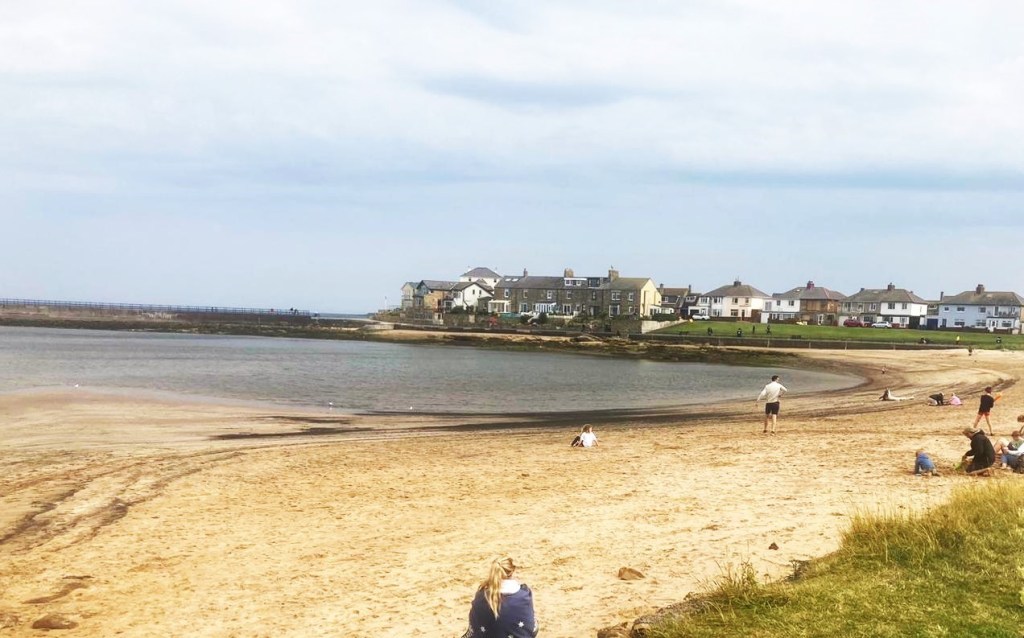
THE VILLAGE OF SEAHOUSES ON THE NE NORTHUMBERLAND COAST. COMMUNITIES LIKE THIS ARE COVERED POORLY BY BOTH REGIONAL AND NATIONAL TV PROGRAMMING. PHOTO TAKEN AUGUST 2024 COURTESY OF IAN PENNELL
Back in the 1980’s, the Independent Television Network consisted of fifteen separate Regional TV companies (franchises) which each provided dedicated local and Regional TV services. In some of these there were also opt-outs which provided local news for different parts of those ITV Regions (there was, for instance, the Selkirk opt-out that provided local news for the Scottish Borders and northernmost Northumberland from Lookaround produced then by Border Television. Even the BBC Regions covered all parts of their respective transmission areas better, Mike Neville was universally loved on the English North East’s BBC Look North– because he connected with viewers across the whole Region. Even the weather forecast had a little overlap into the Scottish Borders on occasion for the benefit of North Northumbrian viewers. Alas, those days are long gone.
Nowadays, the 30-minute Regional TV services are provided by the BBC, by ITV.Plc and, in Scotland, by STV. These national broadcasters have their main national HQs in London (or, in the case of STV, Glasgow). Those running those corporations have not one iota of real concern or understanding of folk who live in Amble, Hexham, Cornhill-on-Tweed or St. Abbs. The BBC and ITV.Plc are companies, the clue is in their names, and as companies they are motivated by making money and returning a profit for their shareholders.
Of course, all companies should be allowed to do this, to provide a service for which customers pay- and in the process provide employment and boost economic growth. It is conceivable that if they did not have to pay 25% Corporation Tax and pay excessive Employer’s National Insurance contributions, or sky-high energy costs (because of the policies of a Labour government) that both the BBC and ITV.Plc would be able to provide better local news-services and contribute to regional and national economic growth. But let us not kid ourselves that providing Regional TV for Northumberland or the Scottish Borders keeps the Directors awake at night: As with directors of any corporation, their motivation is making a profit by maximising revenue and, where possible, cutting costs.
The entire model of National TV broadcasters providing adequate local news services is- today- a complete failure.
Local and Regional News is a Public Service: It concerns the provision of information to folk in a format that they can readily absorb (a lot of older folk still don’t have computers and/ or have not got the capacity after a hard day’s work to scroll through the Internet). Regional TV has visual footage and impact (something that radio news lacks), and the broadcaster provides the news that folk need to know without having to scroll through the Internet. And even in 2026, and likely to remain so for a few years, Internet and mobile signals remain poor at times in rural areas. The Orkney and Shetland Isles, in far northern Scotland were recently affected by a widespread internet black-out caused by damaged subsea cables (link here: https://www.bbc.co.uk/news/articles/c0j9p4d7njxo). And for far northern Scotland, a valued regional TV program, STV North News, looks set to be pulled!
It is important that local and national broadcast news is politically impartial, so direct government funding of Regional TV News services is liable to increase the likelihood of pressure to report on what local and national government approves of. However, the current model of two or three large national corporations providing relevant and local news-services for Northumberland and the Scottish Borders does not work. The CEOs of these corporations are not interested in Northumberland or the Scottish Borders; they live 300 or more miles away- from in or near London.
National Solutions from the Government
The solution is for ITV.Plc to be broken up again, as in the past into separate franchises, and the new directors of the regional franchises need to come from within the transmission area of the franchises they head up (or at least within 100 miles of them). With the collapse in advertising revenue, the ITV franchises should be able to raise money from a combination of product placement, selling programme books and merchandise and- along with the requirement that they provide an hour a day of Regional TV plus documentary programming- to charge up to £20 a year per household. In order that local news can be provided for remote rural areas of Northern Britain like the Scottish Highlands, the Northern Isles and Northumberland and Scottish Borders, the franchises will need to number about thirty across the whole country- with at least six of these north of the Scottish Central Belt.
With regards to the BBC, with the TV Licence under review next year long with the BBC Charter, there is an excellent argument for requiring the BBC to spend a higher proportion of TV Licence revenue on providing News, Current Affairs, and Documentary programming- including with Regional TV. As part of that shift the BBC could, under the renewed Charter, be required to reinstate all Regional TV services that have been mothballed, provide a new BBC Isle of Man service and additional BBC Regional TV for the Scottish Highlands and Islands, along with another for North East Scotland. The BBC should also be required to provide separate Regional TV for Northumberland and the Scottish Borders, also for Cumbria and northern Lancashire. This will ensure that rural communities in northern Britain are served by Regional TV services that provide topically and locally relevant news for remote northern communities.
Sadly, not even a Labour Government keen to borrow and spend large sums of money is likely to do anything like this, not least when it is really unpopular and facing pressure from the Bond Markets that lend to governments. Remote areas in far northern England and Scotland are not core Labour constituencies, by and large: When most of the core Labour voters live in cities, the Government is disinclined to do anything that directs funds towards rural Northumberland, the Scottish Borders and Northern and North East Scotland. If Reform UK win the next election (not guaranteed), one of their policies is to axe the TV Licence fee- which means the likely loss of several Regional TV services.
Local Solutions
If the Government is not going to break up ITV.Plc back into smaller local franchises or lean heavily on the BBC to provide more, and higher quality local TV services then local solutions need to provide local news. This requires communities coming together to provide local or sub-regional TV services for the folk living in them.
In 2026, the Internet is almost universally available in the UK (but, as already mentioned, with caveats). It would not be impossible to provide a You Tube or Facebook group with “Local TV” for an area. A little additional technological innovation and some local experts with TV production skills could provide a cabled TV service to households, to enable a news-service that could be watched on television. This requires entire communities, including local councils, to collaborate and set such local news services up.
If folk want and need a local TV News service that provides topically and locally relevant news, they can get it if they have the will and get together in sufficient numbers to demand it at council level. But even as things stand there exist Internet based “local TV” services like Hexham TV (link: https://www.youtube.com/@hexhamtv/featured), though this hardly constitutes a Regional TV service. There’s also That’s TV Lothian, available on Freeview Channel 8- with ten minutes of news specific to Lothian and the Scottish Borders (link here: https://www.thats.tv/lothian/), but this is only available to viewers at the north-eastern end of the Scottish Borders and north-west towards Edinburgh. It may be possible to watch the ten-minute local news-service via the Internet with a Freeview Play device or set-top box, you can then find That’s TV and then channels 70-89 for local services, but there’s no guarantee and it is a faff for those who are not techies!
The fact remains is that there is very little effective local coverage of the vast rural area covering Northumberland, the Scottish Borders and up to East Lothian, east of Edinburgh: There’s certainly nothing that is readily available that would be considered effective local coverage, certainly not that recognises that wider local ties might be cross-Border close to the Northumbrian-Scottish Border, rather than distant conurbations! ITV Border Scotland, transmitted from Selkirk, carries Lookaround which mostly covers Cumbria and south-west Scotland- so it is scarcely local for someone living in St Abbs Head or Wooler! The default ITV Regional News for Northumberland is, of course, ITV News Tyne Tees, a programme which is mostly focussed on Tyneside and Teesside- i.e., up to 100 miles away to the south!
Viewers in the extreme north of Northumberland can get BBC Reporting Scotland from the Selkirk transmitter: However, there is not much news from Edinburgh and eastwards into the main geographical areas of interest for folk from the eastern Scottish Borders or North Northumbrians from it.
Thus a huge rural area of Northern Britain, in which live over 500,000 people have a choice- of news mainly about Glasgow and Edinburgh well over an hour’s travel time to the north-west, or news mainly about Tyneside and Teesside up to 100 miles to the south-southeast (with urban-centric topics and areal coverage), or there’s ITV Border Lookaround with plenty of coverage of the Lake District and Cumbria (rural, but over 100 miles away). Those choices are appalling!
The entire Northumberland/ Scottish Borders region will only get local and relevant TV news-coverage if communities club together and find the resources to set up their own local TV service. This could be via cable, and/ or Internet based, and set up through a Community Interest Company (.CIC) serving the local area, with local reporters, and TV transmission specialists providing a valuable local TV news service for folk living in northern Northumberland, the Scottish Borders and Lothian.
In 2026, it is possible for local communities to come together and pool resources to provide a vital local news-service that TV broadcasters are not providing elsewhere. Rural communities across northern Britain have come together and formed CICs and Community Beneficial Societies to run Community Pubs, Shops, Winter Snow-clearing services, Warm Hubs, etc, in recent years where this is not being provided from elsewhere.
Even a You Tube Local “TV” News service for Northumberland and the Scottish Borders would be better than nothing. All is required is for someone with local knowledge and an ability to research and produce news and then present it. They could set up a. CIC, advertise and get donations for this very purpose. Someone who is retired, but knowledgeable of the local area and skilled at producing You Tube “News-programs” could do this, and if, by any chance you fit that bill, and you live in rural or North Northumberland, or the Scottish Borders I would seriously encourage you to set up such a Northumberland/ Scottish Borders/ Lothian News-service to cover this huge, poorly covered region of Northern Britain: Potentially over 500,000 inhabitants will be grateful for you!
Solutions for Individuals and their Friends Locally
Despite the absence of any viable local news-service that effectively covers Northumberland and the Scottish Borders there do exist practical steps to acquiring a sit-down-and-watch-the-local-news that stands a higher chance of obtaining local coverage. It is not easy to break the habit of a lifetime, and search out what other news-combinations might be better but if a Wooler family or Seahouses family does not break the habit of switching on BBC Look North, they do nothing to put pressure on broadcasters to alter the content fed to them each night.
Now, ITV Border Scotland provides programming aimed at viewers north of the Scottish Border, and this contains a good deal of coverage that is specific to the Scottish Borders. These are the programs’ Representing Border and Border Life: For sure, these are more documentary-based with a political slant, and perhaps too much coverage of the Scottish Parliament in Holyrood, but they are better than the 80% coverage of Cumbria/ Dumfries and Galloway produced by the flagship regional news-programme Lookaround. Viewers in the far north of Northumberland can catch ITV Border Scotland, transmitted from the Selkirk transmitter, and so will be able to watch such programming with their aerials pointed west-northwest. For viewers in mid-Northumberland who are interested in what is happening in the Scottish Borders, it is possible to watch Border Life and Representing Border from the ITV Border website (link here: https://www.itv.com/news/border/topic/border-life and here: https://www.itv.com/news/border/topic/representing-border).
The least-worst Regional TV News-service that provides Northumberland coverage is ITV News Tyne Tees, which only has about one news-item a night within fifty miles of folk living north of Alnwick. The best way of netting local news in North Northumberland is to go with ITV News Tyne Tees at six o’clock, then watch ITV Border Scotland’s Representing Border – to find out what is happening in the Scottish Borders. This program is usually available on the ITV Border website from about 9.pm in the evening. It is possible, in this way to gain another couple of news-items happening within an hour’s travel time. Once it is realised that, in this way at least three and possibly four news items about rural issues within an hour’s travel time can be received this way each night, one will be able to adjust to watching this combination of Regional TV services that bring the best results.
STV’s News at Six, which airs nightly, can also be viewed from the STV website about an hour after the live broadcast, the Eastern version has plenty of news about Edinburgh, Lothian and the Scottish Borders. However, this East Scotland version of News at Six is is quite Glasgow-centric. For someone living in Berwick-upon-Tweed it is possible to obtain another two news-items that are within an hour’s travel time to the north-west.
This is far from ideal: Neither of the Regional TV News-services mentioned provides anything like effective, topically relevant, and local coverage for the huge rural area between Newcastle-upon-Tyne and North Berwick, on the north-east Lothian coast. However, if one can get in the habit of watching ITV News Tyne Tees followed by Representing Border or STV News at Six once these are available on the Internet later in the evening.
Both BBC1 Look North (NE and Cumbria) and BBC1 Reporting Scotland are also receivable from close to the Northumberland-Scottish Border. BBC1 Look North covers Cumbria as well as all North-East England and much of North Yorkshire, so for someone living near Berwick-upon-Tweed it is likely to have even less local news than ITV News Tyne Tees. BBC1 Reporting Scotland covers all of Scotland, and it is very Glasgow-centric, so there is likely to be little that is either topically or geographically relevant for rural North Northumberland or the Scottish Borders- or indeed East Lothian!
Folk living in East Lothian can pick up That’s TV Lothian, broadcast at 6.pm on Freeview Channel 65 (or Freesat 178), and this provides ten minutes of local coverage of Edinburgh and surrounding districts (link here: https://www.thats.tv/lothian/). Unfortunately for folk living in the Scottish Borders or Northumberland the Lammermuir Hills (just south of Edinburgh) block the signal from the Craigkelly transmitter that carries That’s TV Lothian. The content is also quite limited, there’s just ten minutes of news each evening, unlike the near half-hour offerings from ITV News Tyne Tees or STV’s News at Six.
To some extent, this picking the best combinations of Regional News services to get the most local news for your area or relevance to your daily life can be achieved in a manner to put pressure on broadcasters. If one decides not to watch BBC Look North (NE England) because the content is irrelevant, it is worth writing to them to let them know why- and to explain what you will watch instead. If you encourage friends and family to do the same, that sends a stronger message to Regional broadcasters that they could lose viewers.
Alas, boycotting Regional News services are only likely to be effective if one can find an alternative combination of news-services that one could grow accustomed to- because as soon as broadcasters realise that viewers revert to, or continue to watch their programming despite threatening not to they will not improve their services for those viewers. Broadcasters are well able to suss whether viewers have nowhere else to go and dismiss them as “moaning minnies”!
Unfortunately, this is quite true. Regional TV broadcasters know that Northumbrians will watch ITV News Tyne Tees because that is the best there is, and north of the Scottish Border they know that STV News at Six is the best on offer. Until a local Northumberland and Scottish Borders’ TV Service is set up, this will remain the case- and so it remains important for communities to come together to help set up a local TV service (even just on You Tube is better than nothing). At the level of individual households, it is vital for viewers to shop around to see what there is, what combinations of Regional TV service might provide more local coverage overall- and once they can credibly boycott the mainstream Regional broadcast media to write to broadcasters to explain why they are doing so (i.e., Precious little locally-relevant coverage).
National Broadcasters Do Not Provide the Topical or Regional News or Documentary Content that Northumberland and the Scottish Borders, or Northern Scotland needs
Regional, and indeed National TV News really fails folk who live North of the River Tyne, in the Scottish Borders and East Lothian, and indeed in Northern Scotland in quite fundamental ways. Quite apart from the absence of local news-coverage there is a complete failure to recognise that wider Regional and cultural links in this northern quadrant of the UK is fundamentally different from places further south across the UK. There is an assumption by National broadcasters, that Northumberland and rural North and East Scotland have communities with the same musical, travel, and cultural tastes and needs that the UK has overall. This is patently not true, and a closer inspection of some of these vital differences will suffice:
- The assumption that folk stick with the Anglosphere – and that if they have wider international links these must be with the USA, i.e., wishing to travel to America and listen to American pop-music. This is most certainly not true in rural Northumberland and North and East Scotland where music with pipes and fiddles, and Gaelic, Celtic and indeed Nordic music- with ceilidhs and barn dances are rooted in the culture. There are also strong ties between Scotland, North East England and Norway, about which broadcasters scarce mention, though one of the best-known in Northumberland and Tyneside is the link between Voss Ski Centre in south-west Norway and Northumbrian schools (link here: https://vosshostel.com/en/school-groups/). Kathryn Tickell is a Northumbrian musician who plays music with pipes and a fiddle, with clear connections with Scottish and Norwegian musical influences (link here: https://www.kathryntickell.com/). Folk in northern Scotland widely listen to Gaelic music, and in the far north there is a strong Scandinavian influence on the music (https://www.shetland.org/blog/shetlands-links-with-norway-take-musical-form). An example of the strong Nordic musical ties that Scotland has can be found here: https://www.rsno.org.uk/the-rsnos-guide-to-nordic-music-days/.
- Language itself reflects the fact that there is a strong cultural link between Scandinavia, North and East Scotland and Northumbria- as is exemplified by the fact that in the Shetland Isles they have their own language, Shetlaen, with many common words that are closer to Norwegian than English, i.e., to be built- bygga, inlets- voes (Norwegian: våg), that- dat (Norwegian: at), child- bairn (Norwegian: barn), mountain- fell (Norwegian: fjell), country- land (Norwegian: land). Doric, which is widely spoken in North East Scotland also uses Norwegian words rather than English, i.e., To cry – greet (Norwegian: grate), To know someone – ken (Norwegian: kjenne), Church- kirk (Norwegian: kirke), a young woman – quine (Norwegian: kvinne), “What” is fa (Norwegian: hva). In Northumbria, both the Geordie and Northumbrian dialects also have Norsk influences on the language. This is everyday language, spoken in these parts of Northern Britain! And the National Broadcast media imposes BBC English- or even- American on these communities, telling them they must only listen to English programming in proper English, about Anglo-American celebrities, Chat Shows, Soaps and debates. This is insensitive at best, and rude at worst!
- Another part of the one-size-fits-all that is imposed across the UK is the assertion that children must learn French or Spanish at school, if they are to be taught a foreign language at all (the fact that kids are allowed to drop out at 14 is another incidental disgrace). North of Newcastle and in East and North Scotland, Norway and Sweden are closer than France and Spain, and the historical and cultural links that Scotland and North East England have with Scandinavia means it would make more sense for children to learn either Norwegian or Swedish (including with three or four exchanges per pupil). This would help enrich their cultural experiences and widen their horizons.
- Another disconcerting take is the amount of financial resource that the BBC puts into producing programming for south Asians, in their language. There is, for instance, a whole BBC website with programming in Urdu (link here: https://www.bbc.com/urdu), and there’s the BBC Asian Network, a British digital radio station funded by the BBC. All producing music, news and cultural programming for Asian communities. Those who are interested in Nordic matters, who live in the far North of the UK might normally be pleased to know there is also a BBC Nordic, with programming in English (link: https://www.bbcnordic.com/), but it has precious little coverage of actual news and current affairs in Scandinavia and plenty of coverage of things like The Great British Bake Off and programs on countries in Asia. BBC Alba, which is in Scottish Gaelic, does have more news about northern Scotland and it is better than BBC Reporting Scotland in terms of more local news for the Scottish Highlands and Islands for those who have a grasp of Gaelic, but it would be wrong to call it a bona fide Local Regional News-service for North West Scotland (that it is not).
- Alas, the BBC favours Asians over Scots and Northumbrians born and bred and what their wider interests might be. Just what National Broadcaster anywhere else in the World would prioritise the interests and concerns of those from countries thousands of miles away- over the needs of the local populations in all regions? But the BBC, when money is tight cuts Regional TV (two BBC Regions axed in the South of the UK at Christmas 2022) -whilst maintaining a full programming schedule in Urdu. These are the wrong priorities.
- Travel and wider regional links change across the country. Where folk work, have friends, have family relationships, or go on holiday change markedly. Whilst there is always a desire amongst some folk living in the UK (and particularly in the North) to escape the winter to somewhere warm and sunny for a week or longer, that does not feature so much in wider regional links- where folk travel for short breaks, go to visit family at Christmas or have family. For instance, the English North West (particularly the Liverpool area) has strong links with Ireland, and many families living there have Irish relatives. Further north and east, communities in Northumberland and North/ East Scotland have family ties with other parts of Scotland and- with Norway and Sweden. There are links between Scotland/ North East England and Norway through collaboration in the North Sea Oil Industry and in Fishing, and more recently, with renewable energy with wind-farms erected in the North Sea. In particular, there is a high proportion of folk from in and around Aberdeen, in North East Scotland who move to and from Western Norway in association with the Oil and Gas Industry.
- An extreme example of the links between far Northern Britain and Norway can be found in the very preference of these northernmost communities in Scotland who have expressed or explored a desire for their region or area to separate from the UK and become part of Norway: In July 2023, Orkney Islands Council explored the possibility of the Orkney Islands becoming part of Norway on the grounds of the rich cultural heritage and better fiscal treatment- see here: https://www.theguardian.com/uk-news/2023/jul/02/orkney-could-leave-uk-for-norway-as-it-explores-alternative-governance. Folk in the Shetland Isles often express a strong desire for Shetland to return to its Nordic roots- see here: https://www.shetnews.co.uk/2025/03/12/why-shetland-would-be-better-off-as-part-of-norway/ and here: https://www.shetnews.co.uk/2025/09/08/the-answer-is-a-referendum/. Very little of this is ever mentioned by the BBC, ITV or STV.
Folk living in North and East Scotland and Northumberland like to travel- to the Scottish Highlands, and to Western and Central Norway for short breaks. The links between Northumbrian schools and Voss Ski Resort in south-west Norway is one example, but there are other examples which show the affinity of this northern quarter of Britain with Norway as a country to explore and visit (i.e., here: https://www.youtube.com/watch?v=VdlJ31iY3VE). Again, the BBC assumes that a family from the Scottish Borders has the same love of going to The Channel Islands or Paris for a short break as a family from Hampshire might, or that they both share the same love of Australia’s soap-opera Neighbours or USA Talk Shows (should they have wider interests). That is absolutely not so, and Northumbrians and Scottish Borders’ folk resent having what they Should Like dictated to them by the National Broadcasters that have no clue as to what makes them tick, what their lives are like, who they like to be with and what their cultural background is!
If one considers all areas from the River Tyne northwards up the Northumberland and Scottish East Coasts and all of Northern Scotland there are potentially near five million inhabitants who get news, documentary programming and current affairs from both national broadcasters, both at National and Regional levels that is wholly inappropriate. Where is the programming on farming in Scotland, on fishing in the North Sea, about the perils of private boat trips in the North Sea without proper equipment, life in the Cairngorms, a Series about the Doric dialect in North East Scotland -and the fact that it gives it’s speakers a head-start in learning Norwegian and appreciating Scandinavian music and culture?
Alas, what viewers in North and East Scotland and Northumberland get is as follows: From BBC1 there’s The Traitors, East Enders, Pointless (certainly, given what the BBC was set up for!), Bridge of Lies, Amandaland, Saving Private Ryan (American) and from ITV The Family Next Door, Loose Women, Emmerdale, Coronation Street, Lorraine and Starstruck. And STV’s contents for Scotland has much the same as ITV has for England! What riveting stuff for North Northumbrian and East Scottish communities, little of relevance that addresses their concerns or is sympathetic to their interests, culture or connections: Imposed on folk living in this remote Northern quadrant of the United Kingdom from over 300 miles away is North London Politically-correct Mind-mushing Utter Irrelevance!
Thus, folk need to get together in their communities and write to the National Broadcasters and spell out what they need: That is, to provide programming and coverage for Northern fishing communities, Cheviots and North Pennines Hill-farms, Celtic-Nordic Country Music, Folk who like travelling to their Hyttas and Cabins in the fells for peace and quiet and enjoyment of nature, the Joy of the Great Outdoors, of Friluftsliv– because otherwise there will be angry letters- and protests- from those in Britain’s Northernmost communities at being ignored and dismissed, dictated to and ridden over by a North London Elite that Deems Itself What Is Best for Northern Britain!
Whole communities in the Scottish Borders, East Lothian and Northumberland need to get involved at a political level in the face of broadcasters who just care about their bottom lines. That means people writing to MPs, complaining about the local coverage for this large remote northern quarter of the UK and even setting up campaigns using platforms such as 38 Degrees and Crowdfunder UK. The more local communities can get involved in drawing attention to the lack of a viable, local Regional TV News-service and programming tailored to Northern communities, the more it will gain the attention of local councils and local MPs who- in turn- will put pressure on Regional TV broadcasters and National broadcasters to think about the communities they serve over their bottom lines. Those same broadcasters need to be made very aware that there is a whole different world North of the Watford Gap, even North of Hadrian’s Wall that will have its voice heard, its wishes, fears, dreams, and concerns articulated and that this Northern realm will not be silenced.
Nevertheless, it remains the case that the large TV broadcasting corporations based in London, and in Glasgow Iin the case of STV.Plc) are fundamentally incapable of providing news and other programming that caters specifically for viewers living north of 55̊N. Whilst political pressure can be bought to bear on these organisation and by communities to provide topically and geographically relevant coverage these broadcasters’ funding model does not lend itself to serving Northern communities. For STV and ITV, advertising and some subscription funding is what drives their financial support- and they are reliant on mass viewer audiences to make a profit. Naturally, this puts rural Northern Britain at a disadvantage- just 550,000 folk live in East Lothian, the Scottish Borders and Northumberland.
The BBC is funded by a tax- the TV Licence Fee that households must pay by law if they have a television. This could work, and the BBC could produce excellent local and Regional News programming and documentaries. However, it is a Corporation, with Directors (even though publicly owned), and the motivation remains the same: To make money by bagging the TV Licence Fee and cutting costs. Until remote communities in Northumberland and North/ East Scotland come together with Local TV Programming run and funded by- and for the benefit of- local communities those local communities are not going to get a look in with either geographically or topically-relevant programming. If you live in Northumberland or the Scottish Borders, have the skills and some capital to set up and run a Community Television company- and are reading this this process could start with you- Now.
With kindest regards
Ian Pennell
(Look North Must Look North)

